
Tokyo is not a single, uniform city. It is a collection of neighborhoods, and your first area can change how stressful your arrival feels. This guide helps students, people on working holiday visas, and first-time arrivals choose a practical first base before committing to longer-term housing.
- Which Tokyo areas are easiest for a first month
- How to choose by commute, not only by famous station names
- How share houses, homestays, and monthly apartments change the area decision
- What to check before booking if you arrive with luggage
Where to Stay in Tokyo for Your First Month: Quick Answer
If you are arriving in Tokyo for the first time, choose an area by commute, housing availability, and how easy your first week will be. Do not choose only by sightseeing reputation. The best area for a holiday is not always the best area for your first month living in Japan.
Ikebukuro, Ueno, and areas near major train lines are often easier for a first base because shopping, trains, food, and daily errands are close.
Shinjuku and Shibuya are strong if you value transport and nightlife, but they can feel busy and accommodation can cost more.
Asakusa, Nakano, Koenji, and Kichijoji can feel more local, but you should check commute time before choosing.
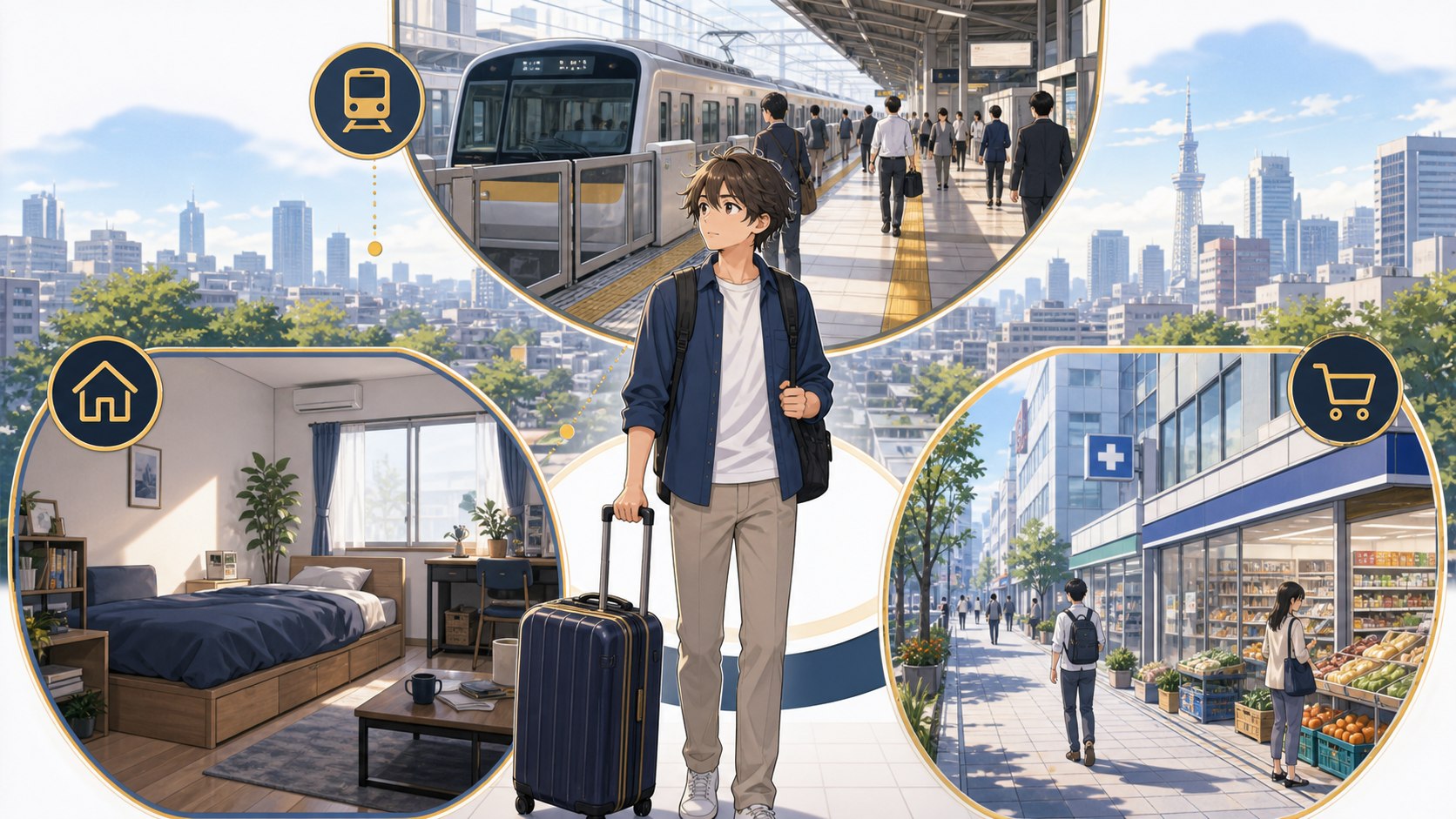
Tokyo first-month decision map
Start from your school or work station, then check transfers and walking time.
Prioritize supermarkets, drugstores, simple restaurants, and laundry access.
Share house, homestay, or monthly apartment options may be stronger in different areas.
Check luggage-friendly access from Narita, Haneda, or your airport pickup drop-off point.
Best Tokyo areas by arrival type
| Area | Good for | What to check first |
|---|---|---|
| Ikebukuro | Students, first-month stays, people who want shopping and trains nearby without choosing the most expensive area. | East side vs west side atmosphere, school commute, and room size. |
| Shinjuku | People who want maximum train access, late arrival flexibility, and many day-to-day options nearby. | Noise, price, and whether the exact address is comfortable at night. |
| Ueno | People arriving through Narita, museum and park lovers, and those who want a practical east-side base. | Station distance, and whether the Narita-to-Ueno route with suitcases, station exit, and final walk are manageable. |
| Asakusa | People who want a more traditional Tokyo feeling, calmer streets, and good access to eastern Tokyo. | Commute to school or work, especially if you need western Tokyo often. |
| Nakano / Koenji | People who want a local, student-friendly mood with food, music, vintage shops, and easier daily life. | Train crowding and the number of transfers to your school or workplace. |
| Kichijoji | People who want a greener, more relaxed Tokyo base and do not mind being farther from central stations. | Commute time and late-night return routes. |
| Shinagawa / Tamachi | People using Haneda often, business travelers, and people who need quick access toward Yokohama. | Higher rent and fewer budget-friendly first-month options. |
How to Choose Where to Stay in Tokyo for Your First Month
1. Start with your school or work station
Search the door-to-door route from the property, not only the nearest big station. A place that looks close on a map can become stressful if you need two transfers, a long walk, or a crowded line every morning.
2. Think about the first 72 hours
Your first days are not normal travel days. You may need food, towels, laundry items, a SIM or eSIM setup, an IC card, city hall errands, and a quiet place to recover from the flight. A slightly less famous area with supermarkets, drugstores, and simple restaurants nearby can be better than a famous station with a complicated route.
3. Match the area to your housing option
Share houses are often easier for a first month because utilities and furniture may be more straightforward. Monthly apartments offer more privacy, but the costs and application requirements can be higher. Homestays can be helpful if you want more day-to-day support and cultural context.
- Short stay: prioritize easy arrival, station distance, and luggage-friendly routes.
- Student: prioritize school commute, supermarket access, and a calm study environment.
- Working holiday participants: prioritize flexible train access and a realistic monthly budget.
- First time in Japan: avoid overly complicated transfers until you are used to the city.
Common mistakes
Shibuya and Shinjuku are exciting, but the best day-to-day base depends on your schedule and budget.
A route with stairs, long station corridors, or late-night transfers can feel very different after an international flight.
Good first-month housing can disappear quickly. Start comparing options early, especially before school terms and busy seasons.
Where HarukaBase can help
HarukaBase helps foreigners compare housing options before arrival, explain the choices in English, and communicate with Japanese housing providers when needed. If your property application requires communication in Japanese or a Japan-side emergency contact, we help you check those requirements before you move forward.
For official neighborhood context, compare Tokyo area pages from GO TOKYO's Shinjuku guide, Ueno guide, and Asakusa guide. Use those as area references, then decide based on your actual commute and housing option.
For a smoother landing, combine your area choice with airport pickup support, housing support, and the first-week checklist.
Tell us your arrival airport, school or work area, budget, and stay length. We will help you compare realistic first-month options.
Tokyo Areas That Work Well After a Narita Arrival
Ueno and other neighborhoods on Tokyo's east side can be convenient after a Narita arrival because they reduce the distance to your first room. Airport access should not be your only deciding factor, but it matters when you have several bags or a late check-in.
Tokyo Areas That Work Well After a Haneda Arrival
Shinagawa, Tamachi, and neighborhoods with straightforward Keikyu or monorail connections can make the first transfer easier from Haneda. Compare that convenience with your school or work commute before booking a full month.
Where to Stay in Tokyo for Your First Month: FAQ and Final Advice
What is the best area to stay in Tokyo for first-time foreigners?
For many first-time arrivals, Ikebukuro, Ueno, Shinjuku, and Asakusa are practical starting points. The best choice depends on your school or work commute, budget, and whether you prefer convenience or a calmer neighborhood.
Is Shinjuku a good area for the first month?
Yes, if you value train access and convenience. It can also be busy and expensive, so check the exact address, nighttime atmosphere, and whether the room is suitable for daily life rather than only travel.
Should I book housing near my school?
Usually yes, but do not consider distance alone. Look at transfers, train crowding, station exits, and walking time from the station to the property.
Can HarukaBase help compare Tokyo housing areas?
Yes. HarukaBase can help compare share houses, homestays, monthly apartments, and area choices in English before you apply.