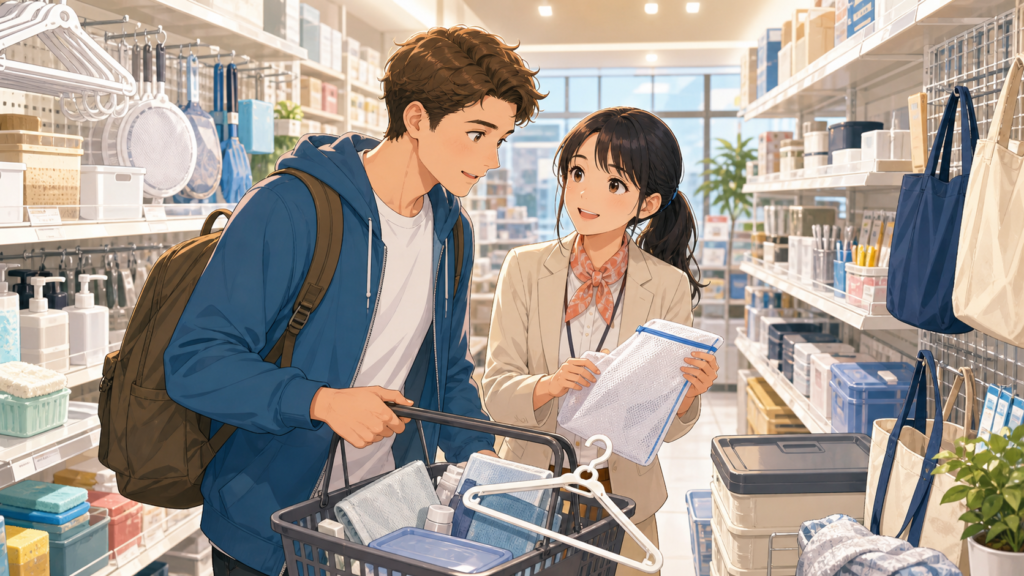
A 100 yen shop can make your first week much easier in Japan. After a long flight, you do not need to solve every day-to-day problem at a department store. Start with small essentials, check prices carefully, and buy only what helps you settle in.
- What to buy first at a 100 yen shop after arriving in Japan
- Which items are useful for laundry, cleaning, kitchen, and documents
- What to skip until you know what your housing already includes
- How to avoid overbuying or missing price labels
100 Yen Shops in Japan: What to Buy in Your First Week
For foreigners arriving in Japan, 100 yen shops are best for small day-to-day essentials: laundry items, cleaning goods, kitchen basics, stationery, storage, bathroom items, and simple travel fixes. Many classic items are priced at ¥100 before tax, or ¥110 including the standard 10% consumption tax, but not everything in the store is exactly 100 yen. Always check the price label.
Hangers, mesh laundry bag, sponge, cloth, trash bags, document folders, slippers, and small storage boxes.
Kitchen tools, umbrellas, towels, chargers, cables, and plastic organizers.
Large cookware, important electronics, bedding, suitcases, and anything your housing already includes.
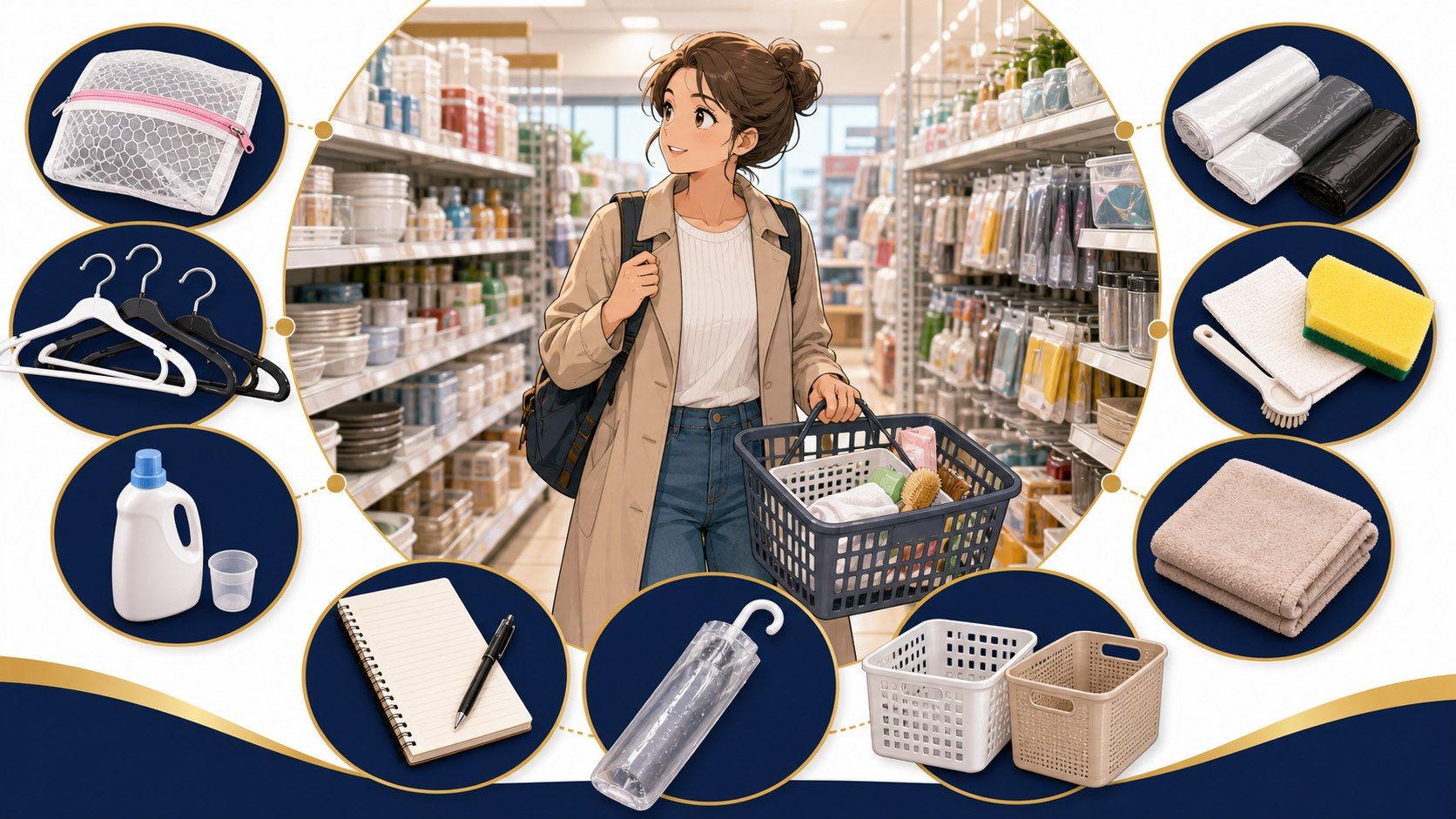
First-week 100 yen shop map
Hangers, mesh laundry bag, wipes, sponge, trash bags, document folder, reusable bag.
Kitchen tools, towels, storage boxes, bathroom baskets, and cleaning tools.
Bulky goods, important electronics, full bedding, and anything your housing may include.
After two or three days, buy what your room actually needs instead of guessing.
First-week shopping list
| Category | Useful items | Why it helps |
|---|---|---|
| Laundry | Hangers, mesh laundry bag, clothespins, small detergent container | Many newcomers need laundry basics immediately, especially in share houses or monthly apartments. |
| Cleaning | Sponges, wipes, small broom, trash bags, sink strainer | You can make your room usable without spending much before you know what you really need. |
| Kitchen | Chopsticks, plate, cup, small knife, food clips, sponge | Good for simple meals during the first few days. Check your housing first because some places include kitchen goods. |
| Bathroom | Soap case, toothbrush cup, bath sponge, small basket | Helpful if you use shared facilities or need to carry items between room and bathroom. |
| Documents | Clear file, pen, notebook, envelope, card holder | Useful for school papers, city hall documents, receipts, and housing paperwork. |
| Storage | Small boxes, compression bags, zip bags, hooks | Japanese rooms can be compact. Small organization items make a small room easier to use. |
| Going out | Reusable bag, coin pouch, umbrella cover, wet wipes | Good for convenience stores, rainy days, and daily commuting. |
How to Shop at 100 Yen Shops in Japan Without Speaking Japanese
- Use photos: show a photo of the item you need instead of trying to translate every word.
- Check the price tag: items priced higher than 100 yen are usually marked clearly, often 200, 300, 500 yen or more.
- Bring a reusable bag: plastic bags may cost extra, and a foldable bag is useful every day.
- Keep receipts: they help you track first-week costs and are useful if you bought the wrong item.
- Do one small trip first: buy only what you need that day. After you understand your room, shop again.
What not to rely on
100 yen shops are excellent for small essentials, but they should not be your only plan for everything. For important electronics, long-term kitchen tools, health items, or anything safety-related, compare quality and instructions carefully. If you are signing a rental agreement, also check what your apartment already includes before buying duplicate items.
Fine for small accessories, but use reliable products for important charging or voltage-related items.
Some stores sell small fabric items, but full bedding is usually better arranged through housing, home centers, or online stores.
Do not buy bulky items until you know room size, storage space, and whether you will move again soon.
Best timing for 100 yen shopping
For store and product availability, check the DAISO official site and DAISO store search. Stock, prices, and product lines can vary by shop, so treat this article as a practical first-week guide rather than a fixed product list.
The best timing is after you have reached your accommodation and checked what is already provided. For a share house or homestay, many items may already be available. For a monthly apartment, you may need more day-to-day goods, but the provider may still include basic furniture or appliances.
If you arrive late at night, focus first on sleep, food, and communication. Use airport pickup support if you want a calmer arrival, then shop the next day after checking your room.
Useful first-week links
For a full arrival plan, read the Moving to Japan First Week Checklist. If you still need internet setup, compare options in the SIM, eSIM, Pocket Wi-Fi and IC Card guide. If you are unsure what your housing includes, check Housing Support before you buy too much.
HarukaBase can combine airport arrival, housing communication, and first-week guidance so you know what to prepare before you land.
Items That May Cost More Than 100 Yen
Some cookware, storage products, electronics accessories, and larger household items cost more than ¥100 before tax. Look for the price printed on the shelf label or package instead of assuming that every item has the same price.
Which 100 Yen Shop Chain Should You Try?
Daiso, Seria, Can Do, and Watts are common chains, but selection varies more by store size and location than by name alone. The nearest large store is usually the most practical place to start.
What to Buy for a Share House or Apartment
Prioritize items your room does not already include, such as hangers, mesh laundry bags, document folders, and small cleaning supplies. Check shared kitchens and bathrooms before buying duplicates.
What to Buy for Travel Days
A reusable bag, wet wipes, a coin pouch, a document sleeve, and small packing bags are inexpensive items that can make day trips and train travel easier.
100 Yen Shops in Japan: FAQ and Final Shopping Tips
Are all 100 yen shop items exactly 100 yen?
No. Many classic items are priced at ¥100 before tax, or ¥110 including the standard 10% consumption tax, but some items cost 200 yen, 300 yen, 500 yen, or more. Check the label before paying.
Which 100 yen shop should I visit first?
Daiso, Seria, Can Do, and Watts are common chains. Choose the closest one first. Product selection changes by store size and location.
What should foreigners buy first at a 100 yen shop?
Start with hangers, mesh laundry bag, wipes, sponge, trash bags, document folders, small storage items, and a reusable bag. Avoid overbuying before checking your room.
Can I buy bedding at a 100 yen shop?
Small fabric and storage items may be available, but full bedding is usually better arranged through your housing provider, home centers, or online stores.