
For many foreigners arriving in Japan, the first housing decision is not about finding a perfect long-term home. It is about choosing a practical first base that matches your budget, privacy needs, move-in timing, and ability to handle communication in Japanese.
- When a share house is easier for a first arrival
- When a monthly apartment is worth the higher setup cost
- What to check before paying for housing from overseas
- How HarukaBase can support communication in Japanese and emergency-contact needs
Share House vs Monthly Apartment in Japan: Quick Answer
This guide answers a common question: share house vs. monthly apartment in Japan. It is especially useful for foreigners choosing a first home base before arrival.
If you want the lowest friction for your first month, a share house is often easier because it can reduce furniture, utility, and move-in stress. If you want privacy and a room that feels more independent from day one, a monthly apartment can be better, but costs and support needs are usually higher.
The best choice is not necessarily the cheapest room. Choose by minimum stay, payment timing, commute, privacy, provider rules, and communication in Japanese.
First-month housing decision map
Short stays usually need flexible housing. Long-term rental contracts need more checks.
A share house is more social and usually easier to move into. A monthly apartment is more private and independent.
Availability changes quickly, so payment may be needed soon after approval.
communication in Japanese, emergency contact, and utility checks can change the route.
Share House vs Monthly Apartment: Cost, Privacy, and Setup
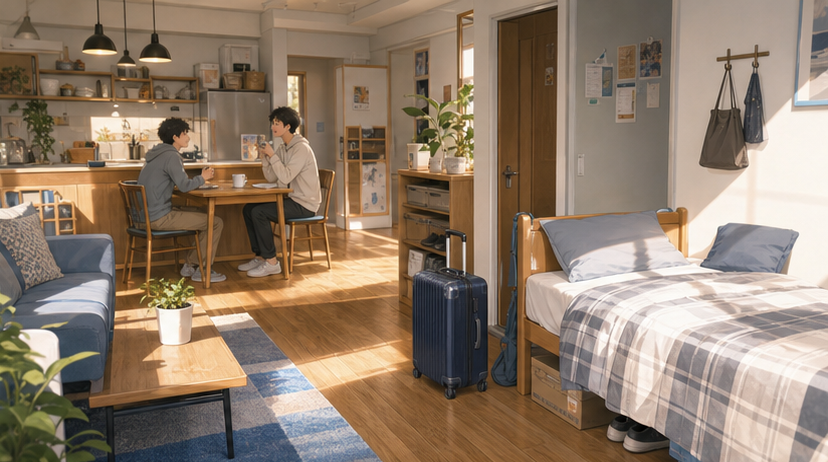
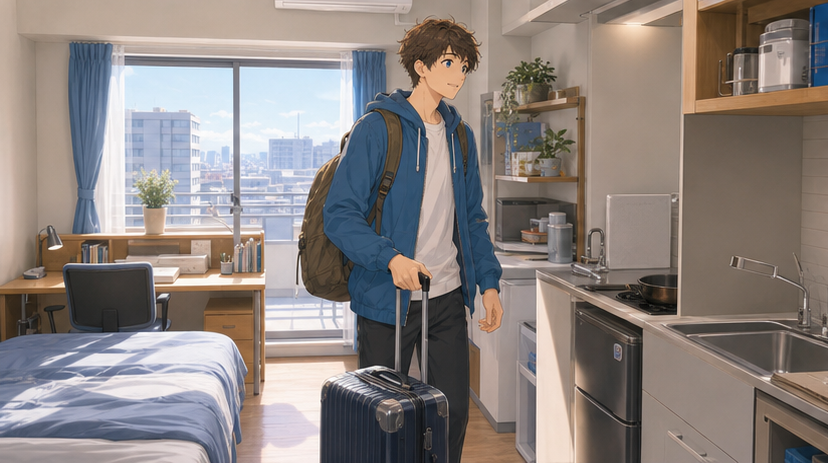
| Point | Share house | Monthly apartment |
|---|---|---|
| Best for | A first stay in Japan, working holiday participants, and people who want less setup work. | People who want privacy, a quiet room, and more independent daily life. |
| Setup | Often easier because furniture and common facilities are already prepared. | Usually more private, but you must check what is included and what is not. |
| Cost style | Can be easier to understand, but shared rules and common areas matter. | Can cost more at the start, and cleaning, bedding, utilities, or fees may be separate. |
| Communication | Provider rules, house rules, and move-in instructions still need careful checking. | Communication in Japanese can be more important because the unit is more independent. |
| Risk | You may have less privacy or different lifestyle expectations from housemates. | You may pay more before arrival and need faster decisions when availability appears. |
Share House vs Monthly Apartment in Japan: What Foreigners Should Check
- Minimum stay and whether one month is charged even for a shorter stay
- Move-in date, payment deadline, and cancellation rules
- Whether utilities, bedding, Wi-Fi, cleaning, and key fees are included
- Whether a Japan-side emergency contact is required by the provider
- How far the room is from your school, work, or first-week errands
- Whether communication is available in English or only in Japanese
When a Share House Is Usually the Better Choice
A share house often works well when you want a furnished room, a simpler move-in process, and fewer utilities to arrange yourself. It can also be practical for a working holiday or an initial stay while you learn the city.
When a Monthly Apartment Is Usually the Better Choice
A monthly apartment is often worth considering when privacy, quiet, and having your own kitchen or bathroom matter more than the lowest upfront cost. Confirm exactly which furniture, appliances, utilities, and cleaning fees are included.
Compare the Total Move-In Cost
Do not compare rent alone. Ask about deposits, administrative fees, cleaning, bedding, utilities, key fees, and cancellation charges. A room with higher rent can still cost less overall if more essentials are included.
Check Privacy and House Rules
In a share house, ask about guests, quiet hours, shared kitchens, bathrooms, and cleaning duties. In a monthly apartment, check building rules, trash collection, noise expectations, and how to report maintenance problems.
Can You Apply Before Arriving in Japan?
Many furnished options accept applications from overseas, but providers may request a passport copy, visa information, arrival date, payment, or a local contact. Confirm the screening process before sending money.
Will You Need an Emergency Contact?
Requirements differ by property. Some providers ask for a Japan-side emergency contact, while others use a guarantor company or a different screening process. Ask which role is required because an emergency contact is not the same as a financial guarantor.
Where HarukaBase can help
HarukaBase can help you compare practical housing options, explain provider conditions in English, and communicate with Japanese housing providers before move-in. In many cases, foreign applicants are asked for a Japan-side emergency contact. When the property allows it and you meet the requirements, HarukaBase may be able to help with this part of the application.
If you are still choosing your first Tokyo area, read our Tokyo first-month area guide. If you already know you need housing help, start from Housing Support in Japan for Foreigners.
Sources checked: Japan housing and living information from MLIT and JETRO. Housing availability, costs, and provider rules change, so HarukaBase confirms current details before you apply.
Share House vs Monthly Apartment in Japan: Final Checklist
Tell us your area, budget, stay length, privacy level, and arrival date. We can help compare share houses, monthly apartments, and other practical housing options before you pay.