A practical first-day guide for foreign visitors, people on working holiday visas, and short-term students preparing for life in Japan.
If you are wondering what to do after arriving in Japan, you are probably trying to turn a long flight, an unfamiliar airport, your luggage, transportation, and your first night into one manageable plan.
This guide is for foreign visitors, workers, people on working holiday visas, and students who want a practical first-day checklist. It covers what to do at the airport, how to reach your hotel or accommodation, how to get connected, and what longer-term residents should handle after settling in.
By the end, you will know the key steps to take in your first 24 hours and which items can wait until the first week.
- Airport procedures and customs
- Pickup or transport to your destination
- Mobile internet and IC card basics
- First-week steps for longer stays
Quick answer: after arriving in Japan, clear immigration and customs, confirm your pickup or transport, get connected to mobile data, reach your accommodation safely, rest, and then handle resident procedures such as address registration if you are staying long term.
- Before leaving the baggage area, confirm every suitcase and keep passports, medication, valuables, and your address pack with you.
- Open the official train or bus page for your actual arrival time. Do not rely on the timetable saved before your flight.
- Check the final hotel step: station exit, elevator, bus stop, short taxi ride, or self-check-in entrance.
- Save one backup route before you buy a ticket or leave the terminal.
Going to Shinjuku with several bags? Compare the direct train, transfer, bus, taxi, van, and delivery tradeoffs in the Narita Airport to Shinjuku luggage guide.
Keep the airport-arrival phrase tool open for ticket, baggage, and address questions.
Use the first hour to separate urgent decisions from tasks that can wait. This helps when you are tired, carrying luggage, or still unsure which station exit, hotel entrance, or city-office step applies.
| Timing | Decision | Why it matters |
|---|---|---|
| Before leaving arrivals | Phone connection, cash/card access, first address, luggage count, and transport route. | These control whether train, bus, taxi, pickup, or delivery is realistic. |
| After check-in | Charge devices, confirm the next morning route, and keep documents together. | Most first-week problems become harder when documents, battery, or address details are scattered. |
| Within the first week | Address registration, insurance, school or work reporting, bank or phone steps if applicable. | Resident procedures depend on visa status, municipality, and your actual living address. |
| Ask for help | No working internet, too much luggage, late arrival, uncertain address, or child/mobility constraints. | These are route-risk problems, not only language problems. |
For route-specific luggage decisions, compare Narita-to-Ueno with luggage, Haneda-to-Shinjuku with luggage, or Kansai Airport to Osaka with luggage. If the station-only plan feels fragile for your group, review Airport Pickup Support before committing to it.
What to Do After Arriving in Japan: First 24 Hours
Your first day in Japan does not need to be complicated. The most important thing is to separate airport tasks from after-arrival tasks. At the airport, focus on entry procedures, customs, luggage, communication, and transport. After you reach your accommodation, focus on safety, rest, and checking the next day's plan.
Before you leave the airport
When you get off the plane, follow the airport signs for immigration, baggage claim, and customs. If you registered your information online before arrival, keep your QR codes and passport ready. If you did not, you can still follow the airport instructions and fill in the required forms where available.
The first practical rule is simple: do not rush out of the airport before checking your passport, luggage, phone battery, wallet, and final destination address. Many arrival problems happen because people leave the secure area tired and then realize they cannot contact their driver, hotel, school, or host.
Arrival memo: save your hotel or accommodation address in English and Japanese before your flight. If you use airport pickup, also save the driver's meeting point and your support contact.
Use Visit Japan Web and customs
Visit Japan Web by Japan's Digital Agency is an online service for arrival procedures such as immigration and customs. It can make the arrival process smoother, especially if you prepare it before your flight.
For customs, Japan Customs explains that passengers entering Japan need to submit a Declaration of Accompanied Articles and Unaccompanied Articles. Japan Customs also recommends electronic declaration through Visit Japan Web where available. You can read the official customs information here: Japan Customs declaration guide.
Important: rules and airport procedures can change. Always follow the latest airport signs, airline instructions, and official Japanese government guidance on your arrival day.
Find your pickup or transport
After customs, your next priority is getting to your first destination. If you booked airport pickup, confirm the meeting point before leaving the arrival lobby. A name-board pickup is helpful because you do not need to search for a platform, ticket machine, train route, or taxi stand while tired.
If you use public transport, check the final train or bus time carefully, especially for late-night arrivals. Major airports have good access, but not every destination is easy to reach at night with luggage. If your flight is delayed, your original train or bus plan may no longer work.

| Option | Best for | Watch out for |
|---|---|---|
| Airport pickup | First-time visitors, late arrivals, heavy luggage, families, students, workers | Book in advance and confirm the meeting point |
| Train or bus | Travelers with light luggage and clear routes | Last train times, transfers, ticket machines, station distance |
| Airport taxi | People who need a direct route without pre-booking | Fare can vary by distance, time, and road conditions |
Get connected with SIM or Wi-Fi
Mobile data is not just convenient in Japan; it is part of your safety plan. You may need maps, translation, hotel messages, train apps, emergency contact, or WhatsApp support. If your phone supports eSIM, setting it up before arrival can reduce stress. If not, airport counters and rental services may be available depending on the airport and time.
Before leaving the airport, test that your phone can open maps and send a message. If your battery is low, charge it before moving. A simple message like "I have arrived and I am going to the hotel now" can prevent a lot of worry for family, school staff, or your support contact.

Settle into your first night safely
Once you reach your accommodation, keep your first night simple. Check in, confirm the address, connect to Wi-Fi, drink water, and review the next day's plan. If you arrived late, do not force yourself to solve everything immediately. Everything is easier to handle after you have rested.
Make sure you know how to lock the door, where the nearest convenience store is, and how to contact the front desk, host, school, or support staff. If you are staying in a share house, apartment, or homestay, check the basic rules for noise, shoes, trash, and shared spaces.
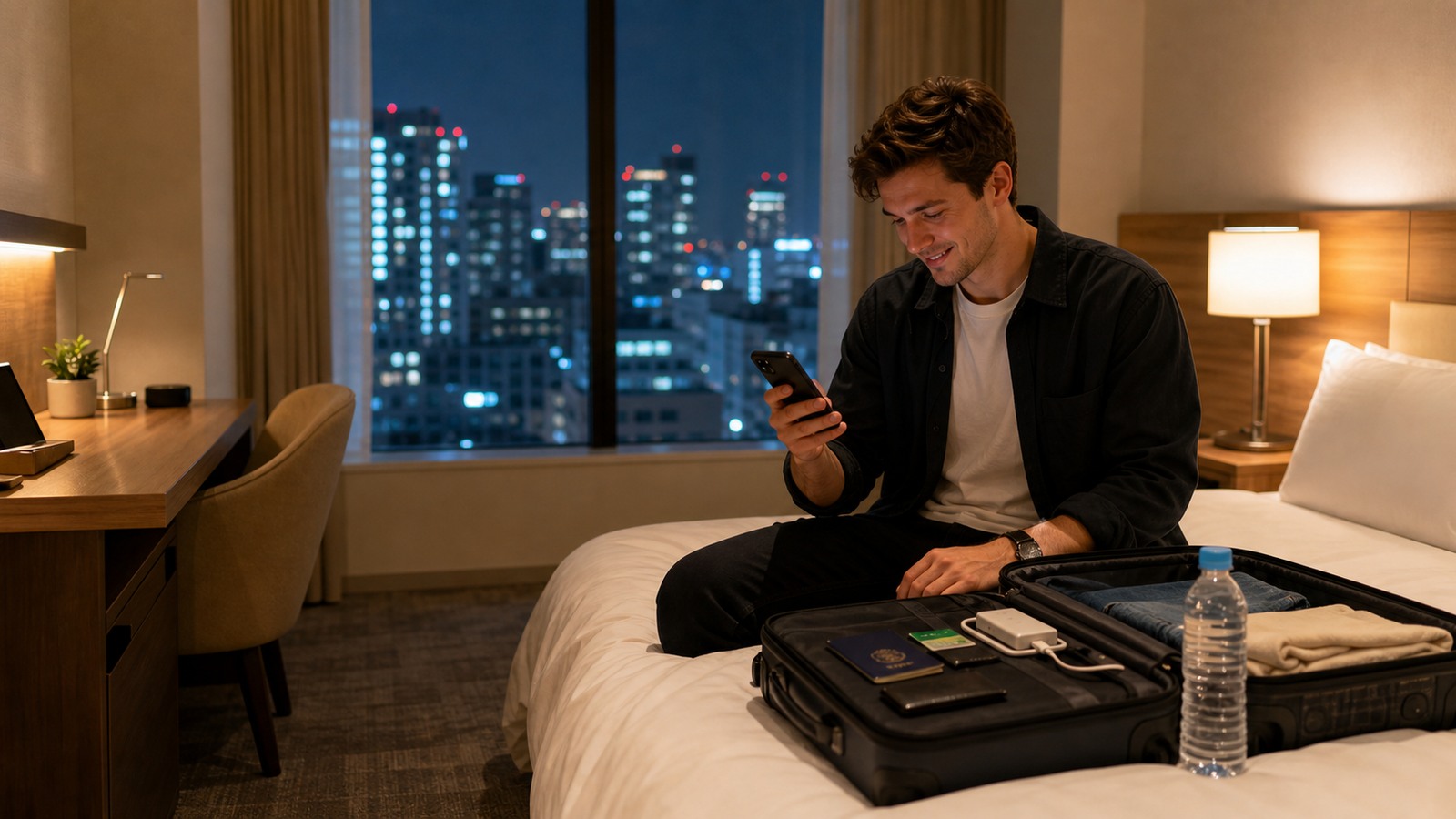
What to Do After Arriving in Japan for a Smooth Stay
After the first night, your next steps depend on whether you are a short-term visitor or a resident. Tourists usually focus on transport, money, internet, and itinerary. Workers, people on working holiday visas, and students may also need address registration, residence card updates, housing setup, school or workplace communication, and day-to-day systems.
Register your address if staying long term
If you are staying in Japan for more than three months and receive a residence card, address registration is one of the most important early steps. Many universities and local guides explain that foreign nationals staying over three months should register their place of residence at the city or ward office within 14 days of finding a place to settle. Kobe University explains this process for international students on its official arrival procedure page: Kobe University immigration and residence procedures.
For most people, this means going to the municipal office for the area where you live. Bring your residence card, passport, and address information. Requirements can vary by municipality, so check your local city or ward office website or ask your school, employer, housing provider, or support contact.

Keep your residence card with you
A residence card is an official ID for mid- to long-term foreign residents in Japan. JETRO explains that it is issued to foreign nationals who legally reside in Japan with relevant residence status. You can read the overview here: JETRO residence card overview.
If you are a tourist with Temporary Visitor status, you usually do not receive a residence card. If you are a resident, treat the card carefully. You may need it for address registration, phone contracts, bank procedures, housing, school, work, and identity checks.
Do not ignore resident procedures: if you are a student, worker, or working holiday participant, ask your school, employer, or local office what you must complete and by when. Administrative deadlines matter.
Set up money, IC card, and phone basics
Even if you use credit cards, having some Japanese yen can help in your first few days. Smaller shops, local buses, clinics, and certain housing or school-related payments may not always match your preferred payment method.
An IC card is also useful for daily movement. The Japan National Tourism Organization explains that IC cards can be used for trains, buses, vending machines, convenience stores, some taxis, and other services. You can check JNTO's official IC card guide here: JNTO IC card information.
If you plan to stay longer, your mobile setup may change from a travel SIM to a longer-term mobile plan. Do not rush into a contract you do not understand. Check cancellation rules, payment methods, ID requirements, and whether the plan fits your length of stay.
Prepare housing and day-to-day support
Housing is often the biggest stress after arrival. A hotel is simple, but share houses, homestays, and apartments each have different expectations. You may need to understand deposits, rent, contract terms, furniture, utilities, commute time, move-in date, and communication with the provider.
If you have not decided where to live, make a short list of what matters most: budget, commute, private room, furniture, women-only option, school access, station access, and support language. This helps you avoid choosing only by rent and regretting the location later.
Plan arrival, housing, and school together. For arrival transport, see Japan Airport Pickup with English Support. For your first address and move-in plan, see Housing Support in Japan for Foreigners. If your stay is connected to short-term study, check School agent referral · no HarukaBase fee.

HarukaBase tip: if you are arriving for work, a working holiday, or study, it is safer to plan airport pickup and housing support together. Your first destination, move-in date, and support period affect each other.
Common arrival mistakes to avoid
Many first-day problems are avoidable. The most common mistakes are leaving the airport without internet, not saving the accommodation address, underestimating late-night transport, assuming English support will always be available at taxi stands or service counters, and trying to complete too many tasks while exhausted.
Another mistake is mixing tourist advice with resident advice. A tourist may only need transport, internet, money, and hotel check-in. A resident may need address registration, residence card handling, insurance, school or workplace contact, phone setup, and housing steps. Your checklist should match your status and length of stay.
Simple first-day rule: airport, transport, internet, accommodation, rest. Do the government and housing tasks after you are safe, reachable, and able to think clearly.
Final checklist for what to do after arriving in Japan
Here is the practical checklist to keep:
- Clear immigration and customs
- Collect all luggage before leaving customs
- Confirm your pickup, train, bus, or taxi route
- Test your mobile data, Wi-Fi, or support chat
- Save your accommodation address and contact details
- Reach your first destination safely
- Rest and review your next-day plan
- Register your address if you are a long-term resident and have established your residence
- Set up transport, money, phone, and housing basics during the first week
If you want support with airport pickup, flight delay communication, name-board meet-up, accommodation search, or the first days after landing, HarukaBase can help you plan the arrival process in English. Your first day in Japan can be safe, organized, straightforward, and manageable.
Contact HarukaBase for a free quote if you would like help with airport pickup or arrival support.
Next Steps
After arrival day, the next decisions are internet, housing, address registration, and transport.
School applications: EL Nippon Academy is our partner contact. HarukaBase charges no support fee for this referral. School and agent costs are confirmed directly with the partner.