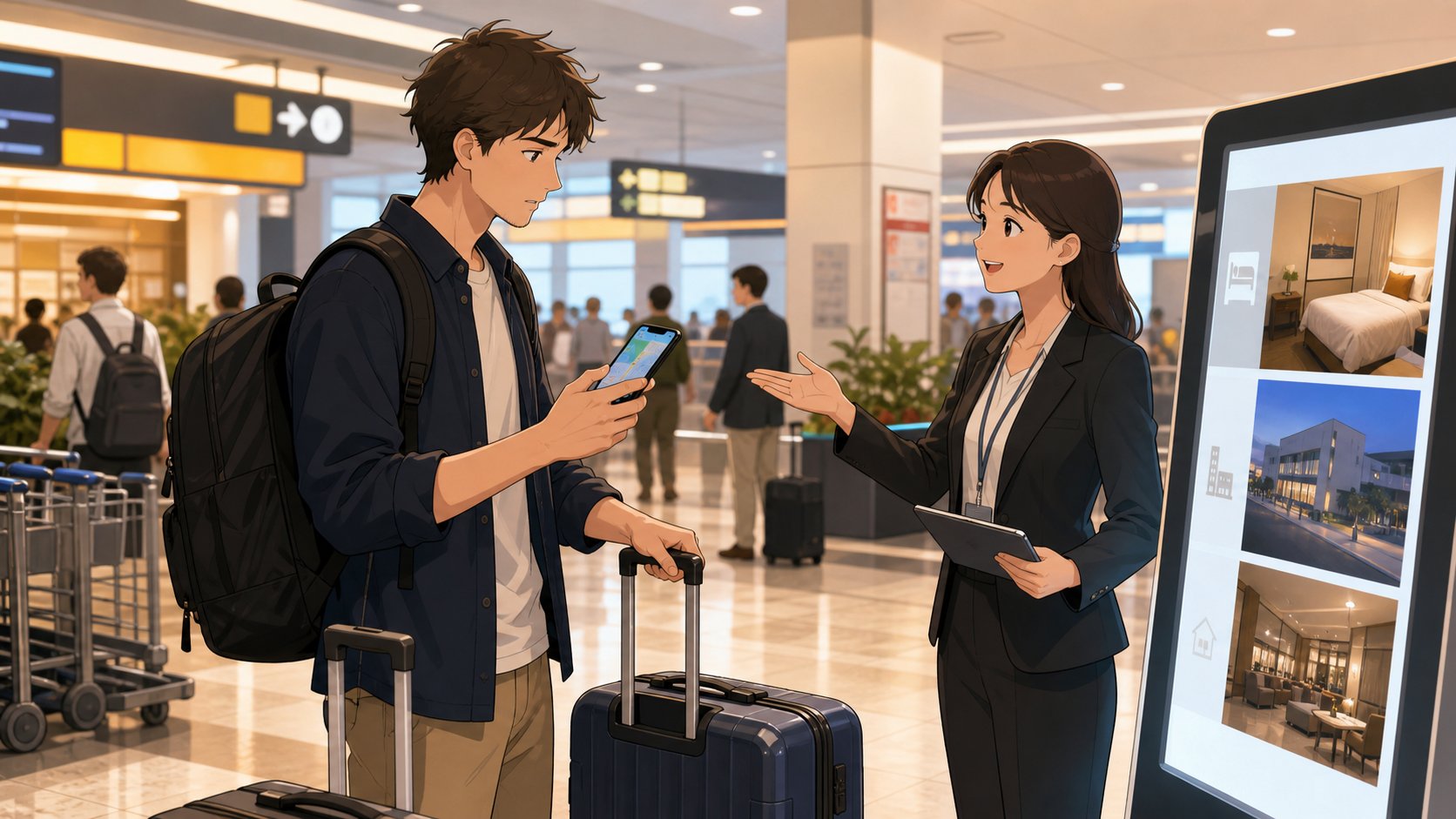
Arriving in Japan with no housing is stressful, but it is not a reason to make a rushed apartment decision at the airport. The practical goal is to secure a safe place for the first night, choose a temporary stay that keeps your luggage and phone access manageable, and then work through the documents, provider rules, and Japanese communication needed to find longer-term housing.
If you are arriving in Japan with no housing, secure one safe first-night stay before you leave the airport, keep your passport and residence-card documents accessible, avoid signing a long rental contract you do not understand, and use the first few days to compare share houses, homestays, monthly apartments, or school/employer housing. For mid- to long-term residents, address registration happens after you decide where you will live.
- Do not arrive with zero plan: even one flexible hotel night is better than searching while exhausted.
- Separate first night from fixed housing: a bed tonight and a legal rental contract are different decisions.
- Keep Japanese address details ready: airport, hotel, school, and housing staff may need clear contact information.
- Use official rules for procedures: address registration, residence cards, and leases should be checked against official or provider guidance.
Information checked: July 24, 2026. Accommodation availability, provider rules, check-in times, and municipal handling can change. This guide is practical planning, not legal, immigration, or contract advice.
Arriving in Japan with No Housing: What to Do First
Before landing, secure one reachable address
It is much safer to arrive without long-term housing than to arrive without any destination at all. Before departure, reserve at least one first-night option that you can reach from the airport. Save the name, Japanese address, phone number, check-in time, and late-arrival rules offline. If the stay can be canceled or extended, even better.
Do not try to find housing after immigration using only airport Wi-Fi and a nearly dead phone while you are exhausted. If your flight lands at night, also check the late-night arrival guide for Narita and Haneda and decide whether public transport, airport bus, taxi, or pickup support makes sense with your luggage.
- Exact address: in Japanese and English if possible.
- Check-in route: reception desk, self check-in, key box, or staff handoff.
- Late-arrival rule: what happens if the flight or train is delayed.
- Luggage rule: whether large suitcases or early storage are accepted.
- Contact method: phone, email, booking-app message, or a messaging app such as WhatsApp.
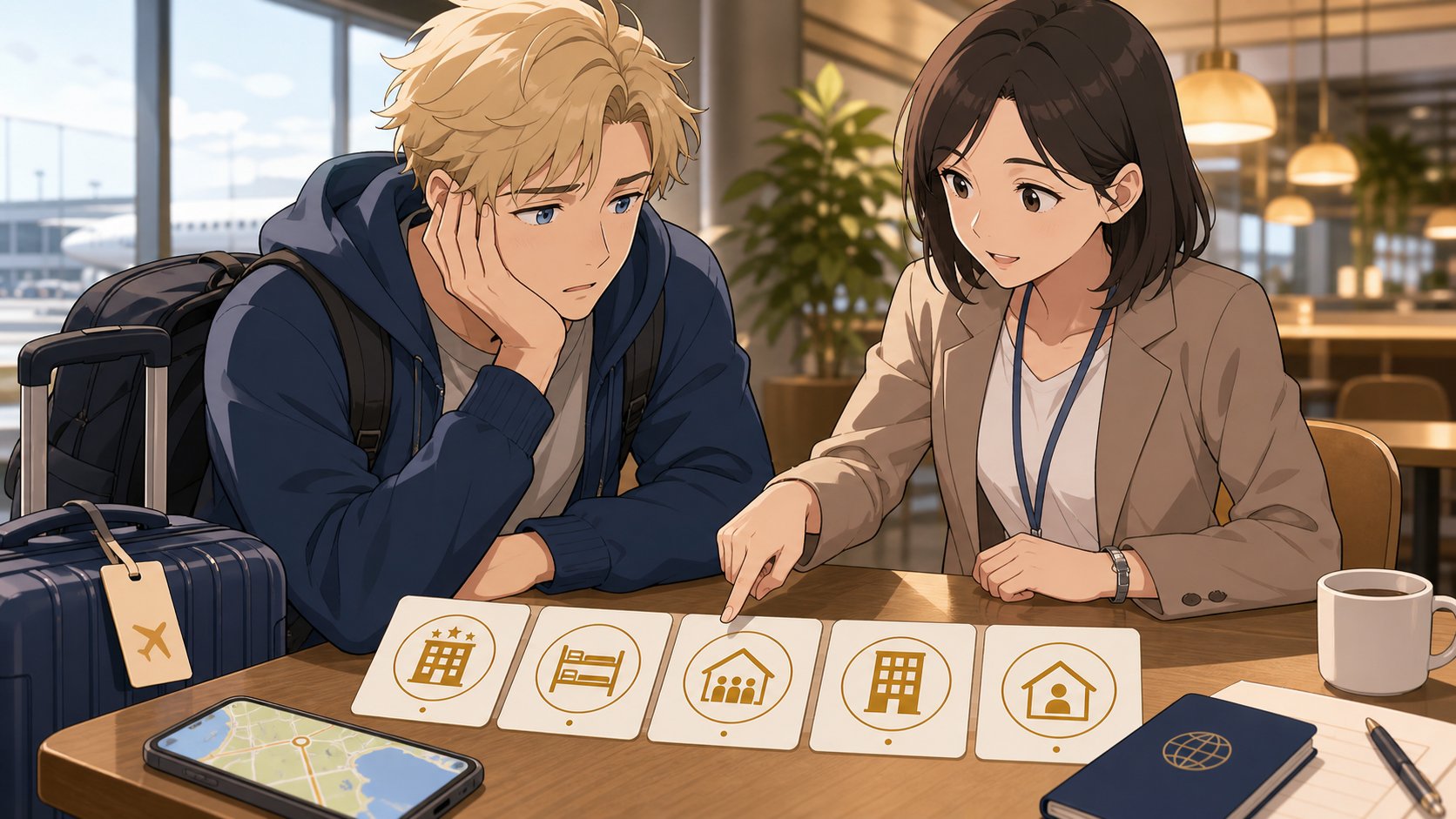
First-night options: hotel, hostel, serviced apartment, share house
For the first night, choose reliability over romance. A staffed hotel is usually the simplest because the front desk can handle late arrivals, luggage, and basic questions. A hostel may be cheaper, but shared-room check-in, quiet hours, and luggage storage need careful checking. A serviced apartment or weekly/monthly room can be useful if you need a kitchenette or several days, but self check-in can be hard without a working phone.
A share house can be good for the first month if the provider accepts overseas applicants and the move-in time fits your flight. It is not something you should try to arrange at midnight from an airport bench. If you need a wider comparison after you sleep, read Share House vs Monthly Apartment in Japan.
| Option | Best when | Watch for |
|---|---|---|
| Hotel | You need the most predictable first night after a long flight. | Late check-in, passport registration, luggage storage, and total nightly cost. |
| Hostel | You need a lower-cost temporary bed and can handle shared rules. | Reception hours, quiet rules, luggage space, and privacy. |
| Serviced or weekly apartment | You need several days, a kitchen, or a quieter work/study base. | Self check-in, minimum stay, cleaning rules, and payment method. |
| Share house | You want a first-month base with lower setup burden than a private apartment. | Screening, move-in appointment, house rules, deposit, and room availability. |
| Monthly apartment | You need privacy and a stronger temporary base before a longer lease. | Initial cost, contract language, utilities, furniture, and cancellation terms. |
When a temporary stay is not enough
A temporary stay gives you a bed for the night, but it does not solve the whole housing problem. If you are coming to Japan for school, work, a working holiday, or a long-term stay, you still need to decide whether your first stable address will be a dormitory, homestay, share house, monthly apartment, private rental, or housing provided by a school or employer. Each path has different documents, rules, move-in timing, and Japanese communication needs.
Use the first 24 to 72 hours to get some sleep, set up phone data and payments, organize your luggage, and then make a housing decision. The Moving to Japan First Week Checklist can help you plan the rest of the week after the first night is safe.
Address registration and residence card timing
Foreign nationals residing in Japan for more than three months receive a residence card. The Study in Japan official site says that after you determine where you will live in Japan, you should bring your residence card to the municipal office for your area within 14 days to register as a resident. The important phrase is after you determine where you will live.
That does not mean every temporary stay can automatically be used as a registered address. Municipal handling can vary, and the provider’s documents may matter. If your first stay is a hotel, short booking, or temporary room, ask the municipal office or provider before assuming it can be used for resident registration. HarukaBase can help you prepare questions, but it cannot change municipal decisions.
Documents providers may ask for
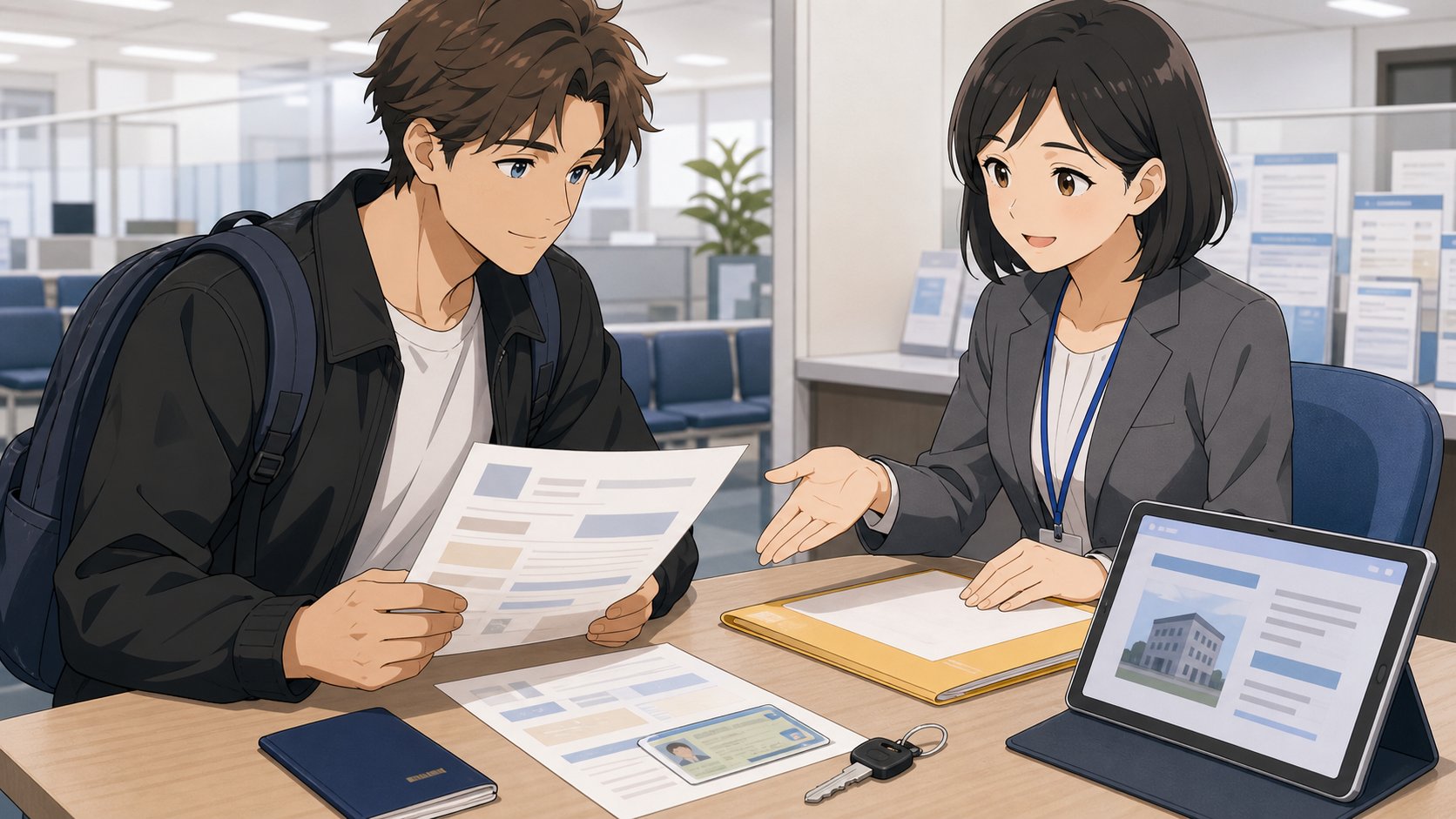
Housing providers can ask for identity, residence status, expected move-in date, emergency contact, school or workplace information, income or savings proof, and a reachable phone or email. MLIT’s foreign-rental housing materials include sample rental documents and checklists, and they are useful because Japan’s lease procedures may differ from those in your home country.
If a provider asks you to sign Japanese documents quickly, slow down. A real estate application, lease, guarantor-company form, important-points explanation, or cancellation rule can affect money and responsibility. Use the Japan apartment guarantor guide and the emergency contact guide before treating those words as small details.
Arriving in Japan with No Housing: Choosing a Safe First Stay
Compare housing routes by length and risk
The right route depends on how long you need the room, how much privacy you need, how much Japanese you can handle, and whether you already have a school, employer, guarantor, or emergency contact path. Avoid choosing only by monthly rent. A cheaper room can become expensive if the commute is wrong, the contract is unclear, or move-in is too late.
| Housing route | Good fit | Main risk |
|---|---|---|
| Hotel or hostel | 1 to 7 nights while you reset and confirm next steps. | Cost rises quickly and it may not solve registration or long-term needs. |
| Homestay | You want support, meals or daily-life practice, and clear house rules. | Availability, compatibility, commute, and provider screening. |
| Share house | You want a furnished room and a flexible first base. | House rules, shared facilities, screening, and move-in appointment timing. |
| Monthly apartment | You need privacy and a longer temporary base. | Initial fees, documents, cancellation rules, and utility setup. |
| Private rental apartment | You are ready for a longer lease and stronger paperwork. | Guarantor, emergency contact, upfront cost, contract language, and furniture. |
If you want practical support comparing these routes, start from HarukaBase Housing Support. The service page explains support paths without changing provider rules or rental decisions.
Airport arrival, luggage, and late check-in
Large luggage changes the first-night housing decision. A station that looks close on a map may involve stairs, crowds, rain, or a long walk. If your check-in is late, confirm whether staff will still be there, whether a key box requires Japanese instructions, and whether you can contact the property from a foreign phone number.
If your first address is hard to reach, compare public transport with airport pickup support. For broad airport-to-room planning, also read What To Do After Arriving in Japan. The point is not that every traveler needs a private car; it is to avoid getting stuck with suitcases at the wrong station after midnight.
Mistakes that make housing harder
- Booking only one nonrefundable night: leave room for flight delays or provider delays.
- Ignoring check-in hours: a self-check-in room can be risky if your phone or data fails.
- Signing a lease you cannot read: ask before payment, cancellation, or repair rules become binding.
- Assuming a hotel solves resident registration: confirm with the municipal office and provider.
- Underestimating luggage: big suitcases make transfers, stairs, and small rooms harder.
- Waiting too long to contact housing providers: good rooms can fill before your arrival week.
Frequently asked questions
Can I arrive in Japan without a permanent apartment?
Many foreigners arrive with temporary accommodation first, then move to a longer room. The risk is arriving without any reachable first-night address or contact plan.
Can I use a hotel for address registration?
Do not assume it. For mid- to long-term residents, official guidance connects address registration to the place you decide to live. Ask the municipal office and accommodation provider if your stay is temporary.
Which is better for the first month, share house or monthly apartment?
A share house is often easier for cost and furniture, while a monthly apartment offers more privacy. The better choice depends on availability, commute, rules, documents, and move-in date.
What if I land late and cannot check in?
Contact the property before flying, save the late-arrival instructions, and prepare a backup hotel or transport plan. If luggage and timing are difficult, compare airport pickup with public transport.
Can HarukaBase guarantee a room?
No. HarukaBase can help you compare routes, prepare questions, and communicate with providers within the agreed support scope, but room approval, availability, price, and contract terms are decided by providers.
If you are arriving in Japan with no fixed room yet, send your arrival airport, date, first-night plan, city, school or work area, stay length, luggage count, and housing preference. HarukaBase can help you compare practical options in English and Japanese without promising provider approval or changing rental rules.
Arriving in Japan with No Housing: Summary
Arriving in Japan with no housing should be handled in stages: secure one safe first-night stay, protect your phone and luggage plan, compare temporary housing routes, confirm address-registration rules after deciding where you live, and avoid signing documents you do not understand. A calm first week is more valuable than a rushed contract.
After you choose a room, continue with the Japan Apartment Move-In Checklist. If school timing is part of the issue, use the Japanese language school accommodation timeline next.
Official sources checked July 24, 2026: MLIT Support for Foreign Nationals in Looking for Rental Housing, Study in Japan immigration and residence-card guidance, JNTO Tourist Information Center, and Study in Japan accommodation guidance. Public forum discussions were used only to identify recurring reader questions.