
Traveling from Haneda Airport to Shinjuku with luggage looks easy on a route map. The harder part is moving every suitcase from the arrival lobby through a train transfer, bus stop, taxi stand, or hotel-side walk after a long flight. Your terminal, arrival time, exact Shinjuku address, number of travelers, and bag count can change the best answer.
Use the airport bus when its Shinjuku stop is close to your hotel and the live timetable fits. Use Keikyu via Shinagawa or Tokyo Monorail via Hamamatsucho when your group can manage one transfer and the final station exit. Use a taxi or confirmed reserved pickup when children, mobility needs, late arrival, or several large bags make door-to-door movement more important. Consider luggage delivery only after the provider and hotel confirm eligibility, cutoff, and receiving details.
- Terminal: T1, T2, and T3 have different access routes, counters, and taxi arrangements.
- Exact destination: Shinjuku Station, Nishi-Shinjuku, Kabukicho, Okubo, and hotel districts are not one curb.
- Total luggage: count large suitcases, carry-ons, backpacks, stroller, and special equipment.
- Transfer ability: decide whether each traveler can move bags through a crowded station and elevator route.
- Backup: save one realistic bus, train, taxi, delivery, or pickup alternative before the flight.
Information checked: August 24, 2026. Timetables, fares, baggage rules, taxi stands, delivery cutoffs, and hotel receiving policies change. Confirm the linked official pages for your own arrival date.
Haneda Airport to Shinjuku with Luggage: Compare the Main Routes
Quick route comparison after baggage claim
Do not compare only the advertised airport-to-station time. Include the arrival-terminal walk, ticket purchase, train transfer, elevator route, traffic risk, and final distance from the Shinjuku stop to your accommodation. A route with one extra short taxi can sometimes be easier than carrying four suitcases across a large station.
| Route | Why it can work with luggage | Main failure point | Best fit |
|---|---|---|---|
| Airport bus to Shinjuku | Large bags normally go in the hold, reducing station carrying. | Traffic, limited departures, baggage rules, and a stop that may still be far from the hotel. | Travelers whose hotel is near a served stop and whose arrival matches the live timetable. |
| Keikyu via Shinagawa | Frequent airport rail access and a familiar JR transfer toward Shinjuku. | Moving luggage through Shinagawa and finding the correct platform and hotel-side exit. | Travelers with manageable bags who can make one station transfer. |
| Tokyo Monorail via Hamamatsucho | The operator shows a practical airport-to-Yamanote Line connection toward Shinjuku. | The JR transfer and the last walk are still part of the trip. | Travelers comfortable with one transfer and rolling bags through stations. |
| Taxi or confirmed reserved pickup | Door-to-door travel avoids train transfers and station exits. | Traffic, cost, tolls, stand rules, waiting terms, and vehicle capacity. | Families, groups, late arrivals, mobility needs, or several large bags. |
| Luggage delivery plus passenger transport | Removes the hardest suitcase movement from the passenger route. | Counter cutoff, eligible hotel, receiving name, and same-day limits. | Travelers who can keep medicine, valuables, and first-night essentials with them. |
Airport bus when the stop and timetable fit
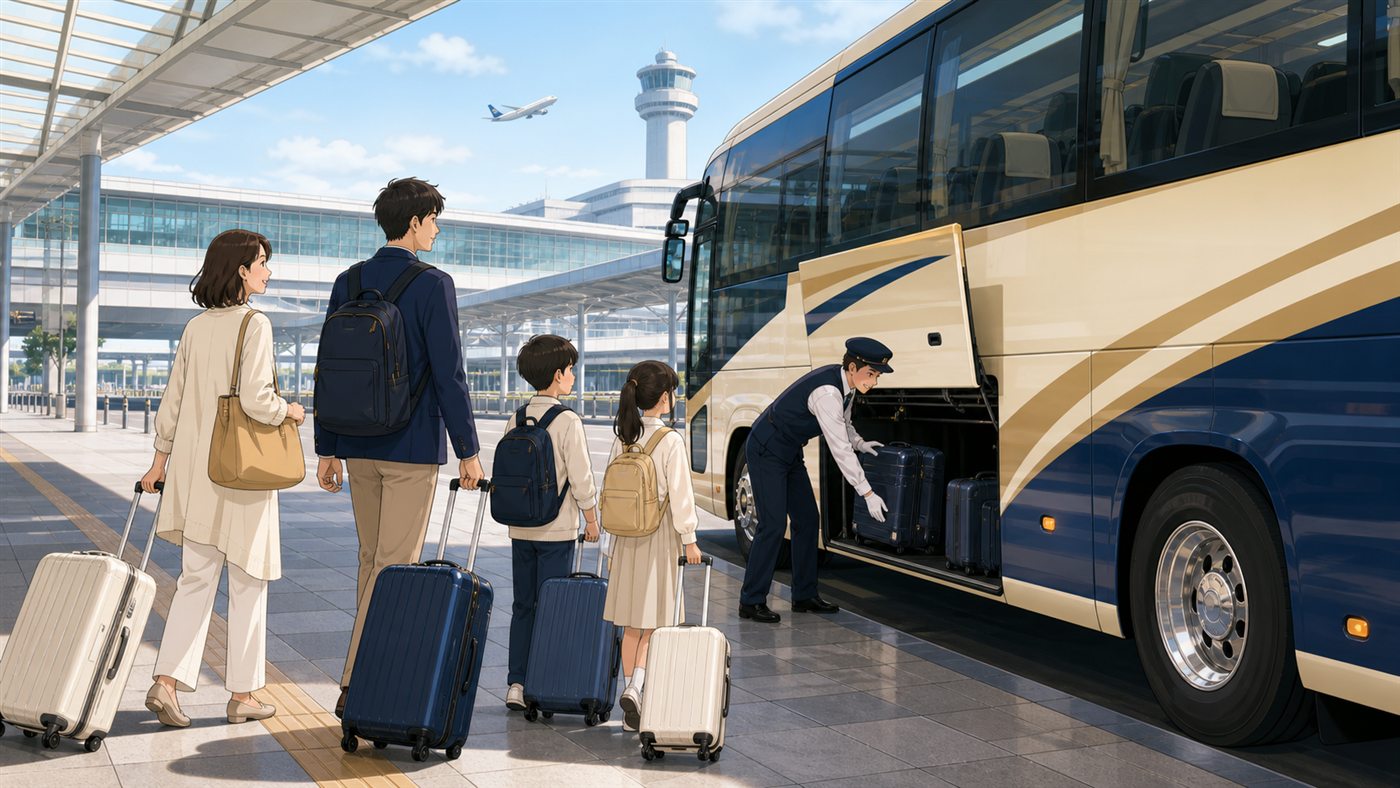
The official Haneda Airport bus page lists Shinjuku Station, Shinjuku Express Bus Terminal (Busta Shinjuku), and Shinjuku-area hotels as a direction. It also explains that passengers should check live operator schedules and buy a ticket before boarding. Terminal bus-stop locations differ, so follow the signs for your own terminal rather than an old screenshot from another arrival hall.
Bus travel can be luggage-friendly because checked suitcases stay in the hold, but the bus does not solve every last mile. Check whether the stop is near your hotel entrance, whether your bag count fits the current operator rules, and whether your flight lands with enough time for immigration and baggage claim before the last useful departure. Keep passports, valuables, electronics, medicine, and power banks with you.
- Confirm the current departure from your terminal after the scheduled landing time.
- Measure the walk from the Shinjuku stop to the hotel entrance.
- Check the current baggage limit and keep restricted or valuable items in the cabin.
- Save a train or taxi fallback in case the flight or road conditions change.
Keikyu via Shinagawa for a one-transfer rail route
Keikyu trains connect Haneda Airport with Shinagawa, where travelers can transfer to the JR Yamanote Line toward Shinjuku. Check the official Keikyu Haneda access guide and the live route for your terminal and arrival time. Train type, platform, fare, and transfer route can change, so do not rely on an old travel blog screenshot.
This route works best when each traveler can control their bags, the group can stay together during the transfer, and the Shinjuku hotel is close to a practical station exit. If one adult must handle several large suitcases plus children, the apparent rail saving may not be worth the transfer friction.
Tokyo Monorail via Hamamatsucho when that transfer feels easier
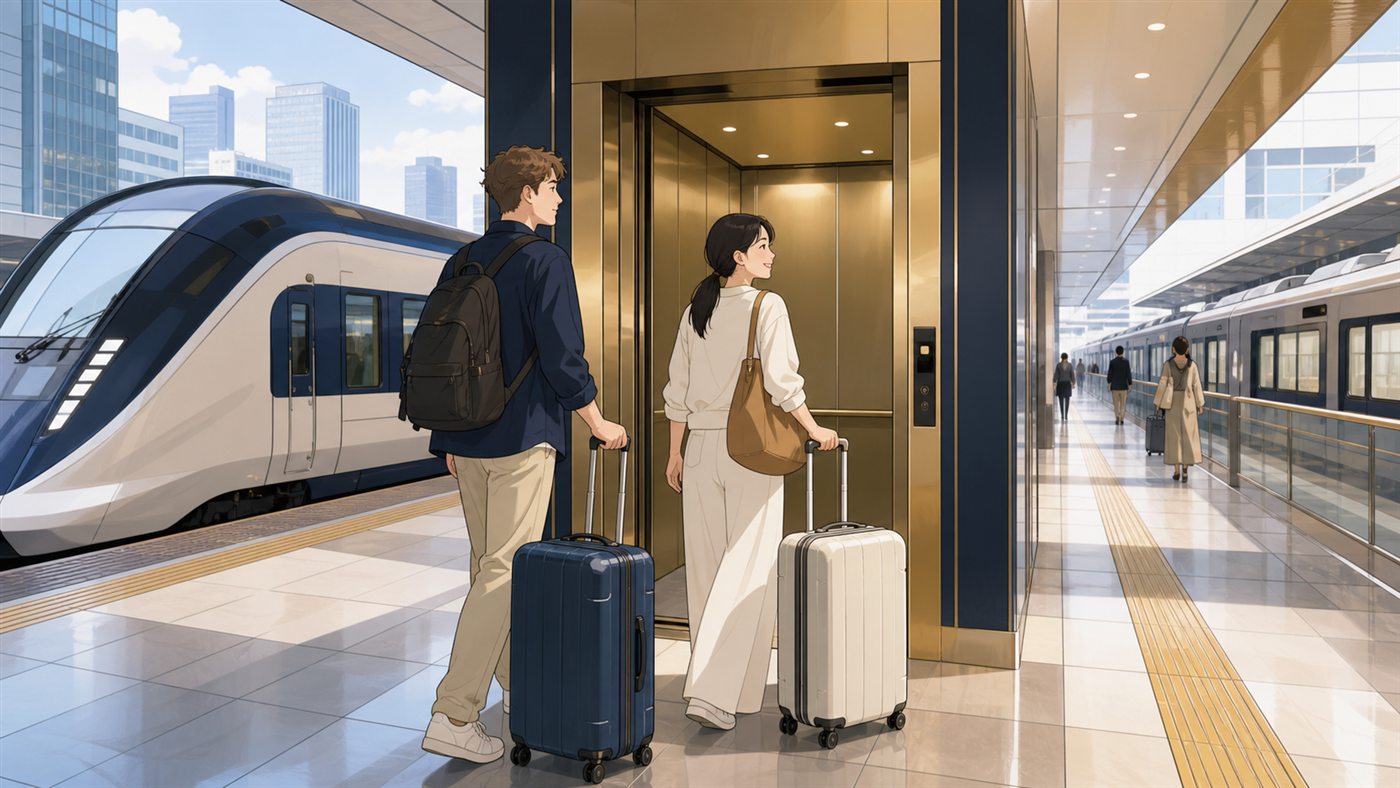
Tokyo Monorail's official access page illustrates Shinjuku at approximately 37 minutes through Hamamatsucho and says trains run about every five minutes on average. Treat that as an operator example, not a door-to-door guarantee. You still need to reach the correct monorail station, transfer to JR, and continue from Shinjuku Station to the hotel.
Compare the Hamamatsucho transfer with Shinagawa on a live route app after landing. The better choice may depend on service disruption, platform access, crowding, and which Shinjuku exit is closest to the accommodation. With heavy bags, a working elevator path matters more than saving a few scheduled minutes.
Taxi or reserved pickup when door-to-door matters
The official Haneda Airport taxi page distinguishes general taxis from app-dispatched and reserved taxis. T1 and T2 have dedicated app/reserved stands, while the page says T3 has no app-based or reserved taxi stand. It also notes that flat-rate routes can apply, tolls are additional, and some areas use the meter.
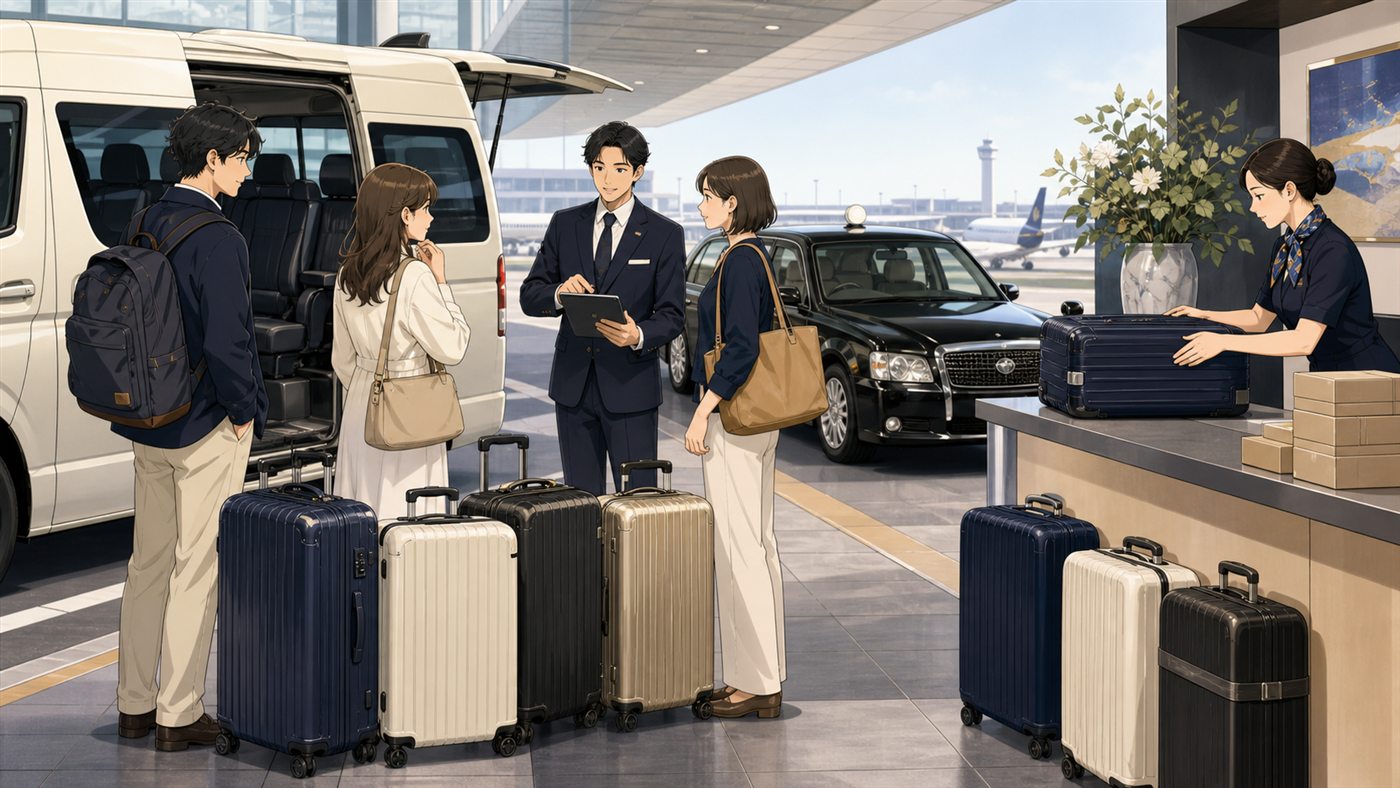
A standard taxi is not automatically large enough for every passenger and suitcase. Before arranging a reserved vehicle, confirm the terminal meeting point, passenger count, exact bag sizes, child-seat or mobility needs, waiting and delay terms, tolls, and cancellation rules. Do not treat a vehicle or quoted fare as confirmed until the provider has accepted the details.
Luggage delivery when the hotel can receive it
Haneda Airport's home-delivery page lists baggage counters in the arrival lobbies, with providers and hours that differ by terminal. The airport facility FAQ also notes that same-day delivery may be available at specified counters, but eligible hotels are limited by provider.
Ask the hotel whether it can receive bags for your reservation, confirm the booking name and cutoff, and keep passports, medicine, valuables, electronics, chargers, toiletries, and first-night clothes with you. For the broader process, read the airport luggage delivery in Japan guide.
Haneda Airport to Shinjuku with Luggage: Choose for Your Arrival
Check the terminal and real ready-to-leave time
Your useful departure time is not the scheduled landing time. Add immigration, baggage claim, customs, terminal walking, ticket purchase, restroom stops, and the time needed to gather the group. International arrivals can use T2 or T3 depending on the flight, while domestic flights generally use T1 or T2. Verify the actual terminal on the airline or Haneda page before building the route.
The Haneda Airport arrival guide explains the broader sequence after landing. Keep the route choice separate: first finish the arrival process, then use the live departure, correct terminal, and exact hotel pin to choose transport.
Match the Shinjuku stop to the hotel entrance
Shinjuku Station is large, and “Shinjuku” can mean very different final walks. Hotels around the west side, Kabukicho, Higashi-Shinjuku, Shin-Okubo, Okubo, or Tochomae may not be equally convenient from the same bus stop or rail exit. Save the hotel name and address in Japanese, a map pin, and the recommended station exit before leaving Haneda.
If the last walk crosses a large station with several bags, compare a short final taxi, a different bus stop, or direct pickup. A route is not complete just because it reaches Shinjuku Station.
Plan differently for groups, children, and large bags
- Number of adults and children, plus child-seat needs.
- Large suitcase dimensions, carry-ons, backpacks, stroller, and sports equipment.
- Whether one person must supervise children while another moves the bags.
- Whether every traveler can use stairs or a long station corridor if an elevator route changes.
- Whether the accommodation has a staffed desk, self-check-in, or luggage receiving rules.
For a group, ask for vehicle capacity in writing rather than assuming “van” means every bag will fit. For rail or bus, keep one adult free to watch children and documents. If the luggage cannot be handled safely, split the plan between delivery and passenger transport or request a confirmed larger vehicle.
Build a late-night or disruption backup
Late-night airport transport is limited and can change with flight schedules. Do not assume a train, bus, delivery counter, or driver will wait for a delayed arrival. Save one backup that works after your realistic ready-to-leave time, including the stand or platform, approximate walking route, and the exact hotel address.
Use the late-night Narita and Haneda arrival guide for a broader fallback checklist. If public transport becomes impractical, confirm a taxi or pickup option before representing it as booked.
- Planning from landing time instead of the time you will actually leave arrivals.
- Choosing the fastest station-to-station route without checking the transfer and hotel walk.
- Assuming one taxi or van fits every person and suitcase.
- Sending passports, medicine, or first-night essentials with delivered luggage.
- Using the wrong terminal's bus stop or reserved-taxi instructions.
- Depending on the last useful departure without a delay backup.
What is the easiest way from Haneda Airport to Shinjuku with large luggage?
The easiest route depends on the exact hotel and bag count. A bus can reduce carrying when the stop fits; a taxi or confirmed pickup can avoid transfers; luggage delivery can help only when the provider and hotel confirm eligibility.
Is there a direct train from Haneda Airport to Shinjuku?
The common rail routes use a transfer, such as Keikyu to Shinagawa or Tokyo Monorail to Hamamatsucho, then JR toward Shinjuku. Check the live route after landing.
Does the airport bus go to Shinjuku?
Haneda's official bus page lists Shinjuku Station, Busta Shinjuku, and Shinjuku-area hotels. Confirm the live operator timetable, terminal stop, baggage rules, and hotel-side distance.
Can I send luggage from Haneda to a Shinjuku hotel?
Possibly, but provider coverage, counter cutoff, same-day availability, and hotel acceptance vary. Confirm both the delivery counter and accommodation before sending a bag.
Can a standard taxi take a group with many suitcases?
Not always. Give the provider the passenger count and bag dimensions and obtain confirmation of vehicle type, capacity, meeting point, tolls, and terms.
Send your Haneda terminal, flight number, arrival time, number of travelers, suitcase count and sizes, child-seat or mobility needs, and exact Shinjuku address. HarukaBase can help compare public transport and pickup options in English and Japanese without promising an unconfirmed vehicle, fare, departure, or delivery result.
Haneda Airport to Shinjuku with luggage summary
The best route from Haneda Airport to Shinjuku with luggage depends on the complete last mile. The airport bus can reduce bag carrying when its stop and timetable fit. Keikyu via Shinagawa or Tokyo Monorail via Hamamatsucho can work when one transfer and the Shinjuku exit are manageable. Taxi, a confirmed reserved pickup, or luggage delivery may be better when bags, children, mobility needs, or late arrival create real friction.
Verify your terminal, use a realistic ready-to-leave time, count every bag, confirm the final hotel entrance, and keep one backup that does not depend on an unconfirmed promise.
Official sources checked August 24, 2026: Haneda Airport access overview, Haneda Airport bus access, Keikyu Haneda access, Tokyo Monorail quick transfers, Haneda Airport taxi guidance, Haneda Airport home delivery, and Haneda Airport facility FAQ. Public search and traveler questions were used only to identify current decision points, not as proof of prices, schedules, or service promises.