You press a button translated as “dry,” come back later, and your T-shirt is still damp. Before assuming your Japanese washing machine is broken, check the Japanese label: it may mean spin, air-assisted drying, or even drying the empty washing tub.
The useful question is not just “Where is the dryer button?” It is “What is this particular mode designed to dry?” This guide helps you tell the difference and plan your next load in a Japanese apartment or furnished rental.
What you will learn
- Four similar-looking labels with different jobs.
- Why spin or air-assisted drying can leave clothes damp.
- What to check before your first wash-and-dry cycle.
- A short Japanese message to ask your host for the right instructions.
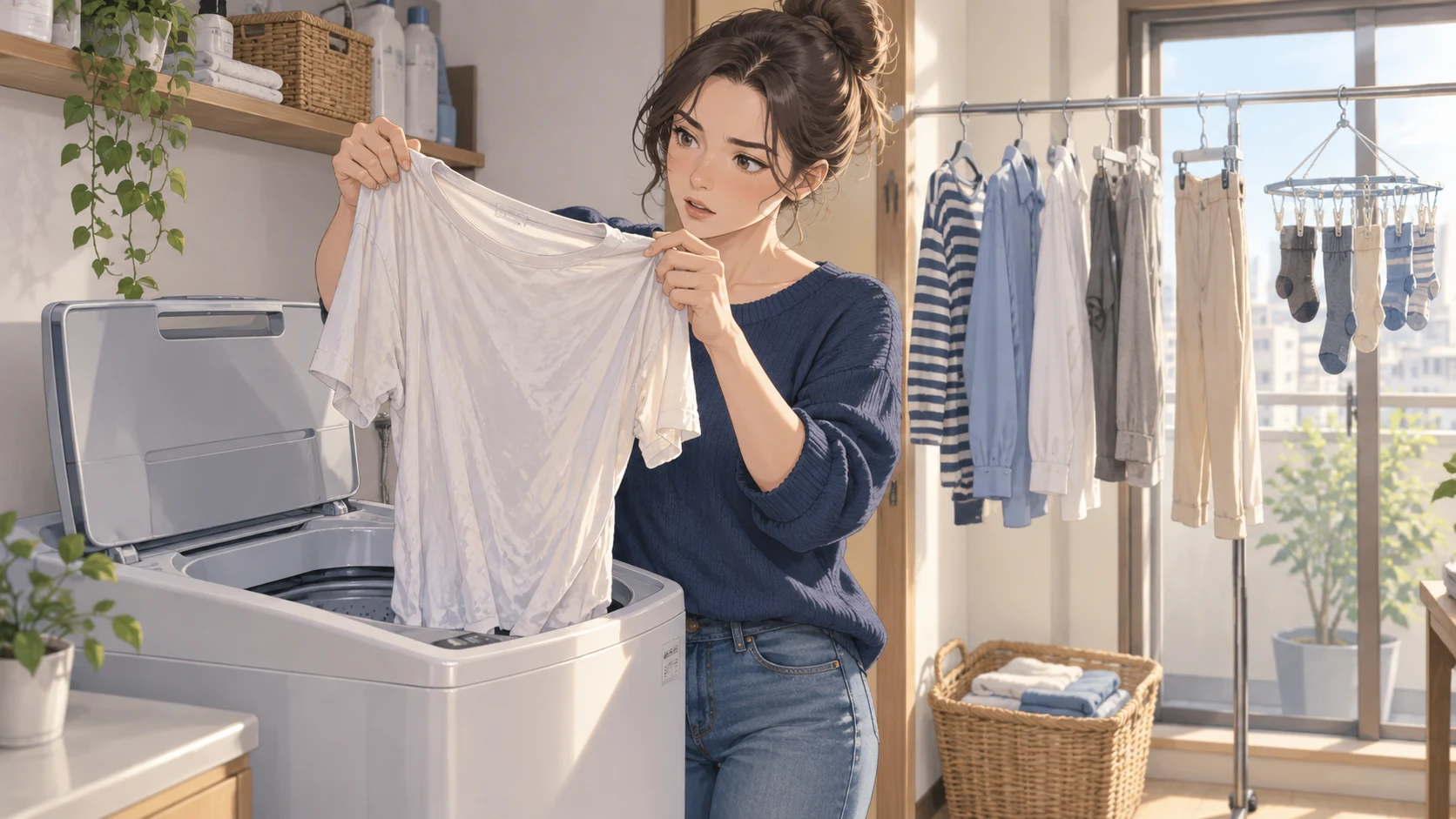
Japanese washing machine buttons: why “dry” is confusing
A translation app is useful, but a short label loses context. Start with the entire phrase, then match it to the model’s instruction manual. Button names and available courses vary between manufacturers and machines.
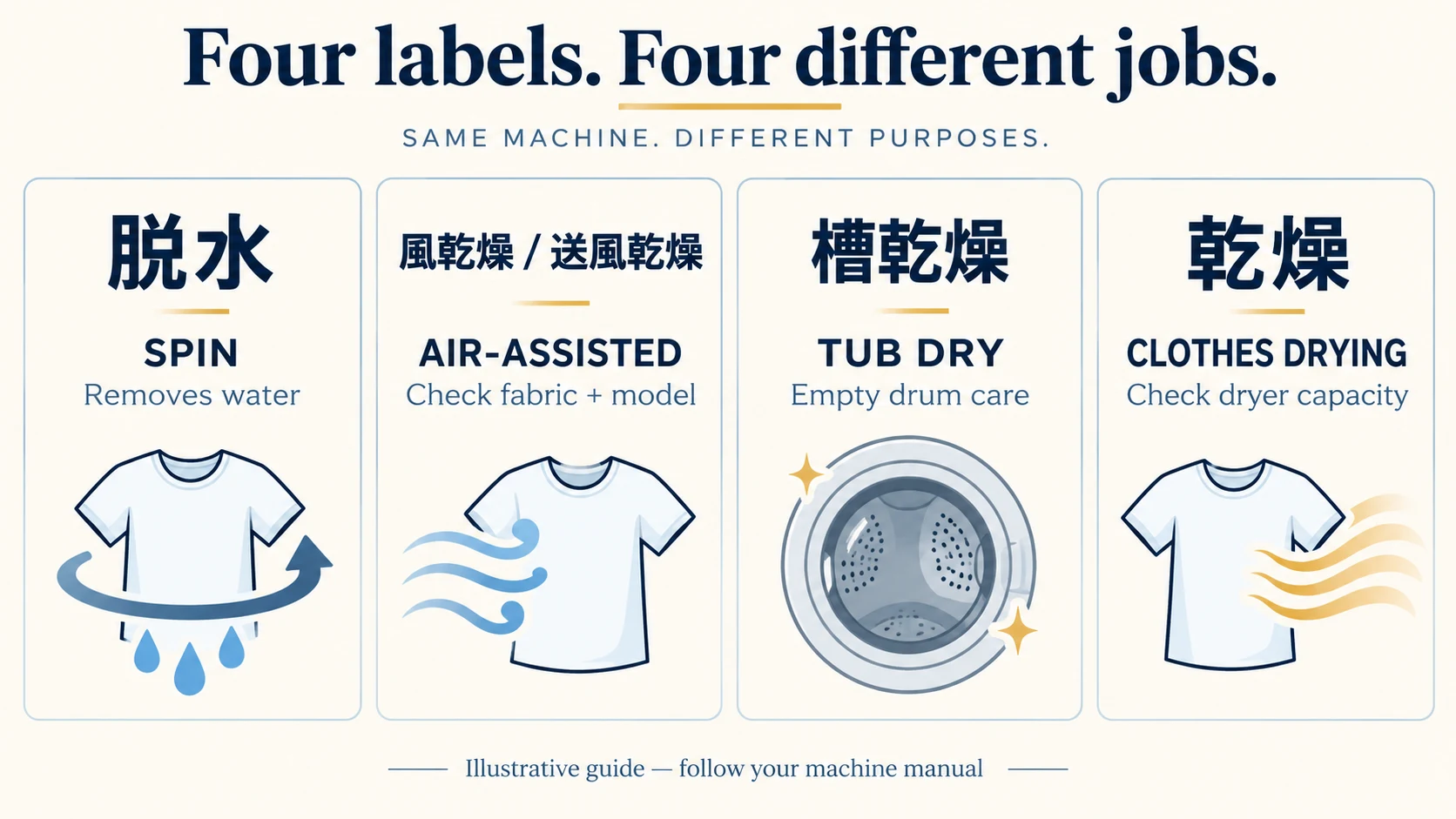
Save this four-label comparison
| Label | Meaning | What to expect |
|---|---|---|
| 脱水 Dassui | Spin | Water is spun out; clothes usually still need drying. |
| 風乾燥 / 送風乾燥 | Air-assisted drying | Results depend on the model, fabric and load. Do not assume a full dryer cycle. |
| 槽乾燥 Sō kansō | Tub drying | Maintenance for the empty tub, not a load of clothes. |
| 乾燥 / 洗濯乾燥 | Drying / wash-and-dry | On a washer-dryer, check the actual clothes-drying course and capacity. |
脱水 means spin, not ready-to-wear clothes
脱水 is the water-removal stage. A normal wash may run through 洗い (wash), すすぎ (rinse), and 脱水 (spin), then finish. That sequence does not itself promise dry clothing.
If the display only offers those three stages, plan a separate drying step. Photograph the full panel rather than one button: the course name and illuminated stage indicators together provide better context. Do not keep restarting spin simply because a cotton shirt feels damp.
風乾燥 and 送風乾燥 need a closer look
These labels can describe air-assisted drying. For the top-loading modes covered in Panasonic’s official explanation, rapid tub rotation creates airflow without a heater. Panasonic says suitable 100% synthetic garments can dry, while cotton and blended fabrics cannot be fully dried by those modes; permitted quantities vary by model.
That makes “air dry never dries anything” an unhelpful blanket rule. A small suitable synthetic load and a basket of cotton towels are different situations. Check the allowed material and capacity before relying on this option for tomorrow’s outfit.
槽乾燥 is about the tub
The character 槽 is the clue. A dedicated 槽乾燥 course is for drying the washing tub. For example, Hitachi’s BD-SV120J instructions explicitly say to run its tub-dry course with no clothing inside.
Do not use tub maintenance as a clothes-drying shortcut. If the label combines functions, such as 槽・風乾燥, read the model instructions to identify the intended setting. A cropped translation of just 乾燥 is not enough.
乾燥 can be a clothes dryer—but check the machine
A washer-dryer may offer a separate 乾燥 course or a combined 洗濯乾燥 course. Confirm that your model actually supports clothes drying. The way the door opens is not a reliable substitute for checking the specification.
Look for separate washing and drying capacities in the manual. Do not assume the largest washing load can also be dried in one cycle. Course-specific limits matter too, especially for bulky items.
Photograph the model number, often labelled 型番 or 品番, and use the manufacturer’s manual search. For example, Toshiba’s laundry support page provides a starting point for its machines. Match the complete model code, including any suffix.
Japanese washing machine checklist: get from wet to wearable
The best first-load plan has two parts: a suitable washing course and a clear drying method. Decide both before putting detergent in.
Check these things before your first load
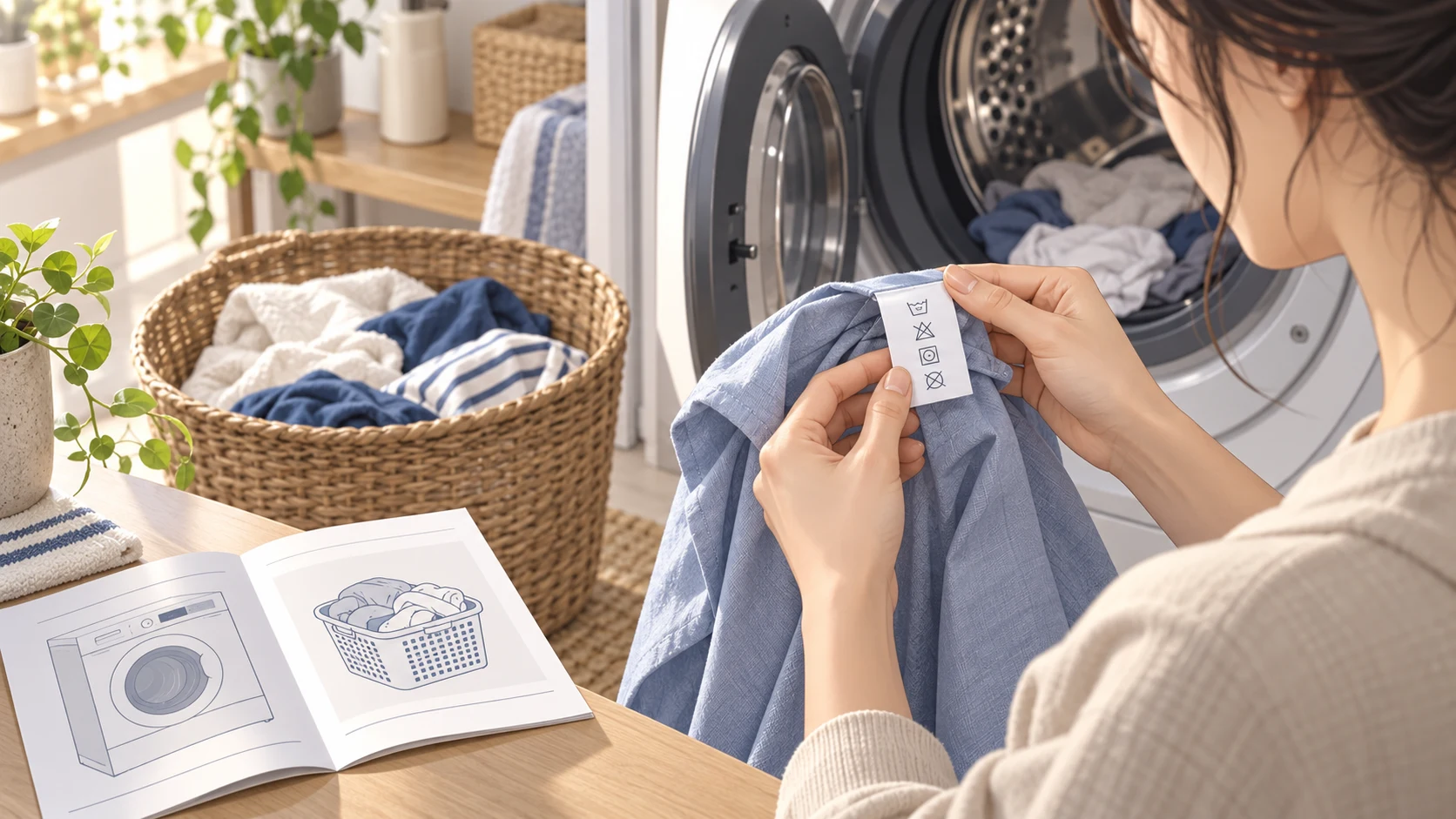
- Read the garment labels. Check both washing and drying instructions.
- Confirm the model and course. Find the correct manual or ask your host for it.
- Check the load limit. Use the limit for the selected course, not just the biggest number on the machine.
- Identify the detergent compartment. Follow the machine and detergent instructions; do not assume every drawer or opening has the same purpose.
- Choose the drying step. Clothes-drying course, permitted hanging area, or a suitable laundromat dryer.
Machine-washable does not necessarily mean suitable for tumble drying. Sharp’s course-selection guide explains that care labels and fabric determine the appropriate course, and that some delicate items may be washable but unsuitable for machine drying. If the garment instructions and appliance manual do not permit the process, choose a permitted alternative.
If you are still setting up your apartment, our Japan apartment move-in checklist helps you organize the other first-week essentials.
Make a practical indoor-drying plan
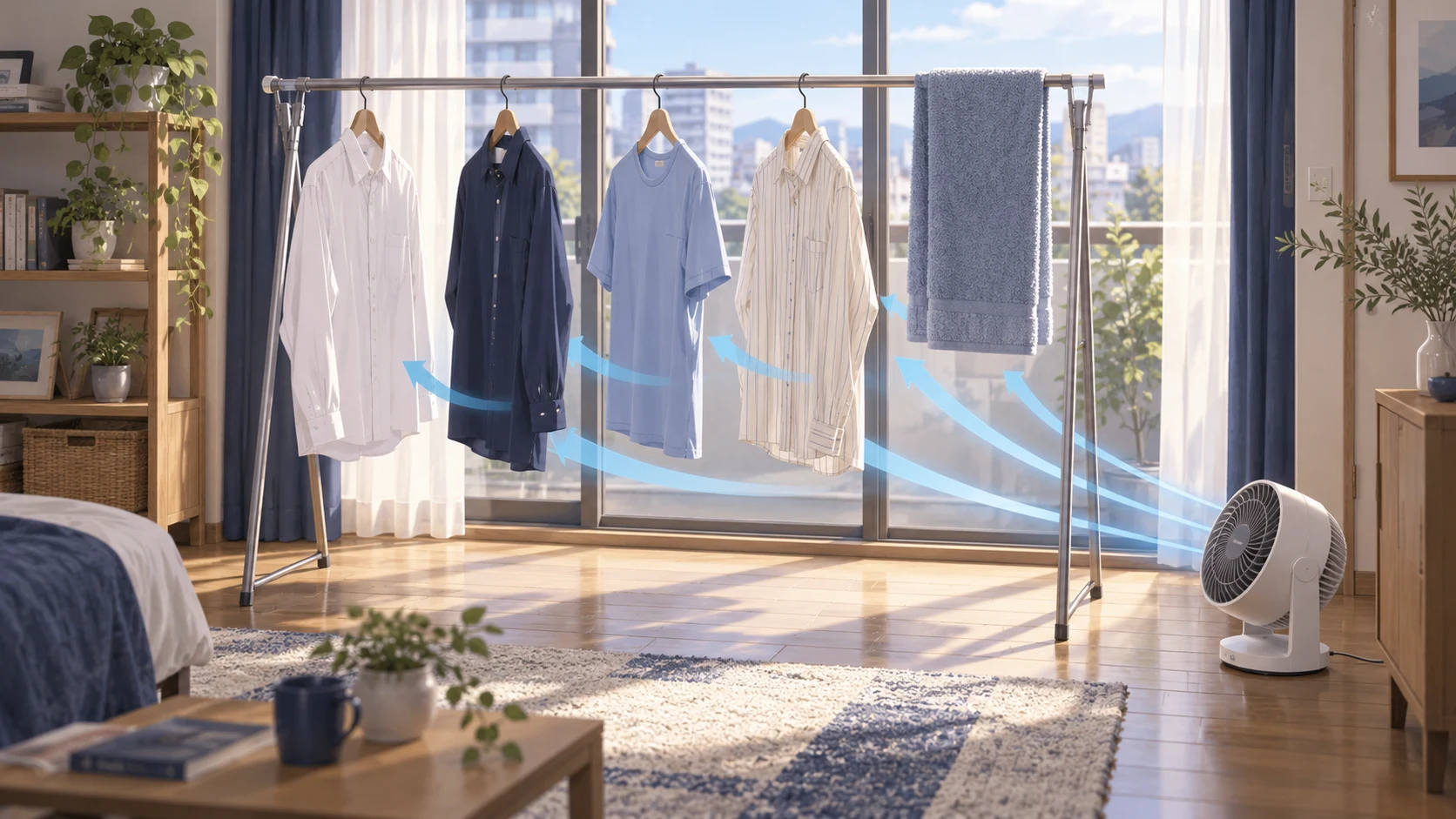
After a wash-and-spin cycle, remove the clothes promptly and give them room on the rack. Hitachi’s indoor-drying advice recommends spacing items at least 10 cm apart and using airflow to move damp air away from the laundry. Manage room humidity with appropriate ventilation or suitable equipment.
A compact rack is more useful when garments are separated than when every rail is packed. Ask your host where hanging laundry is permitted, especially if you are considering a balcony or shared area.
Using your room’s air conditioner? Our Japanese air conditioner remote guide explains its modes. The AC’s “dry” setting concerns room humidity; it does not turn a washing machine into a dryer.
If clothes stay damp after a real dryer cycle
First confirm that you selected a clothes-drying course, then check the load and the routine maintenance described in the manual. Panasonic’s drying troubleshooting guide identifies load, filter condition and operating conditions as possible factors for the machines it covers.
For a rental appliance, send the host a clear description instead of dismantling anything. Include the model number, exact course, approximate load and any error code. A photo of the whole panel helps distinguish an unsuitable setting from a fault.
Need clean clothes tomorrow morning? Keep one outfit aside and confirm your drying option before starting. A machine that finishes washing tonight may still leave you with laundry that needs to hang overnight.
Copy this message to your host or property manager
Use this when the panel is unclear. Replace the bracketed details; attach an appliance photo without showing private documents or other personal information.
English
Does this washing machine have a function that fully dries clothes? I used [course name], but the clothes are still damp. Could you tell me the correct course and maximum drying load? If it cannot fully dry clothes, where may I hang laundry?
日本語
この洗濯機には、衣類を完全に乾かす乾燥機能がありますか?[コース名]を使いましたが、まだ湿っています。適切なコースと乾燥できる衣類の量を教えていただけますか?完全に乾かせない場合、洗濯物はどこに干してよいですか?
This asks about both the appliance and the property’s rules, so you can make a workable plan instead of guessing from a translated button.
Japanese washing machine summary: read the whole label
脱水 removes water. Air-assisted modes have limits. 槽乾燥 cares for the tub. A clothes-drying course still needs the right fabric and load. Save the comparison above and keep a photo of your machine’s model number alongside it.
Moving to Japan for a month or longer? Explore HarukaBase’s housing support as you plan your accommodation. For instructions or a fault with an appliance you already use, contact the host, property manager or manufacturer responsible for that machine.
Manufacturer information checked on October 18, 2026. Functions vary by model. Follow the instructions for your appliance and garments. Images are AI-generated editorial illustrations.