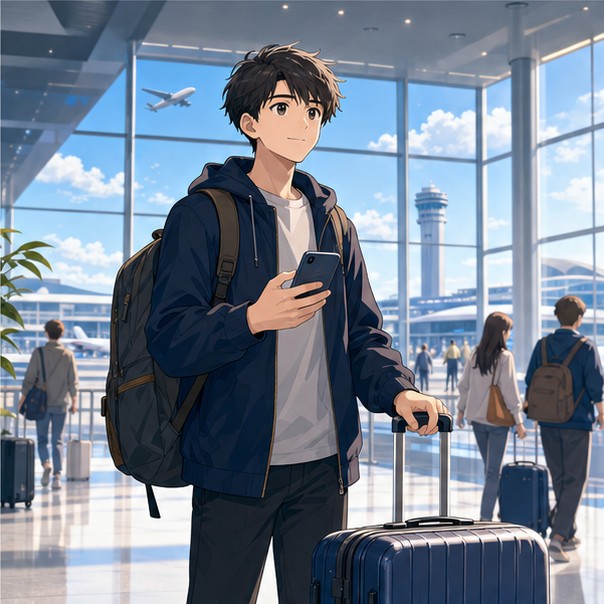
This Kansai Airport arrival guide is for foreigners landing at KIX and trying to make the first hour calm: immigration, customs, baggage, phone battery, luggage, and the route to Osaka, Kyoto, Kobe, a school dormitory, a hotel, or a first apartment. The safest plan is not the cheapest route on a map. It is the route you can still follow when you are tired, carrying suitcases, and working in a new language.
Before your flight, prepare Visit Japan Web, save your first address offline, and choose your post-arrival route by destination, luggage, and arrival time. After landing at Kansai Airport, follow the official flow through quarantine/immigration, baggage claim, customs declaration, and the public arrival area. Then choose train, limousine bus, taxi, or pickup support based on where you need to sleep that night.
- Prepare the QR step: Visit Japan Web can reduce confusion, but your passport, address, and customs details still need to be correct.
- Do not leave route choice until the exit: decide Osaka, Kyoto, Kobe, or first-address access before you are tired.
- Let luggage decide the route: stairs, transfers, late trains, and check-in rules matter more than a small fare difference.
- Use official pages for schedules: airport, rail, bus, taxi, and customs conditions can change.
Information checked: July 27, 2026. Flight timing, terminal flow, transport schedules, fares, airport congestion, and provider rules can change. This article is practical planning, not legal, immigration, customs, or transport-provider advice.
Kansai Airport Arrival Guide: First Steps After Landing
Use Visit Japan Web before you land
Kansai International Airport explains that travelers can register necessary information through Visit Japan Web, create a QR code before departure, then scan the QR code and passport at an integrated kiosk after arrival. KIX says the kiosks are in the immigration areas of Terminals 1 and 2 and at arrival-shuttle stations.
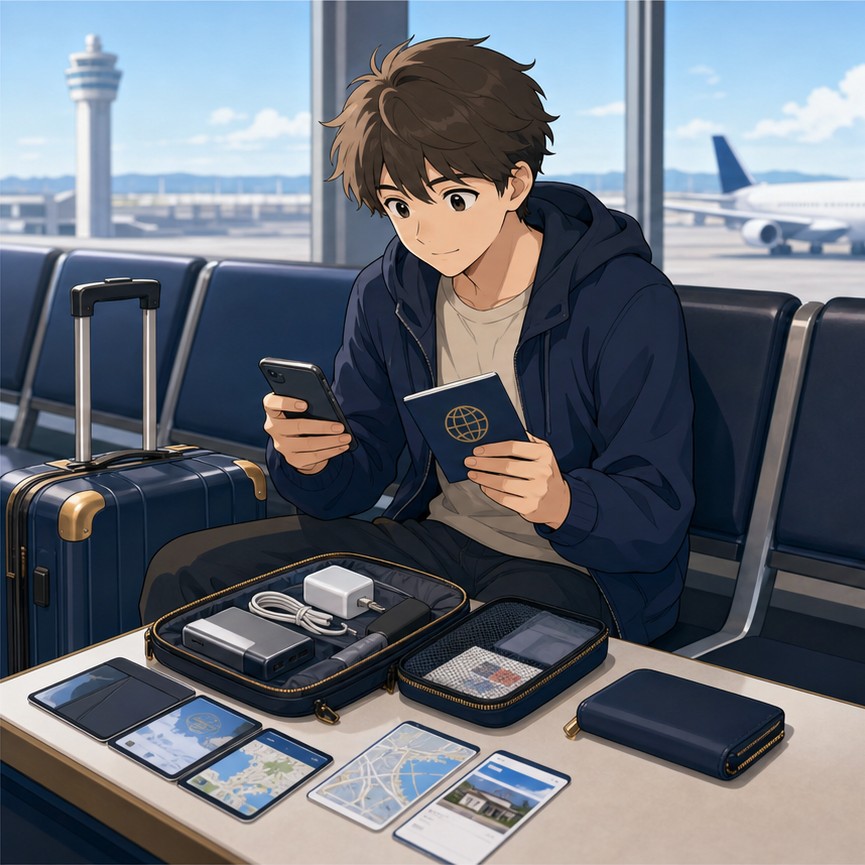
Prepare this before your flight if you can. Also save your hotel, school, share house, apartment, or temporary-stay address in Japanese and English. If your phone loses data or battery, you still need to answer basic destination questions and reach the next place.
Follow the arrival order inside the airport
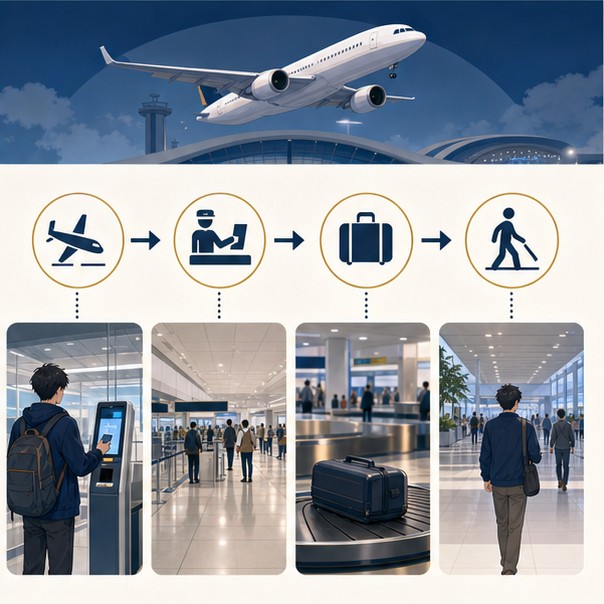
After landing, follow airport signage and staff instructions. The usual international-arrival path is quarantine or health-related procedure when required, immigration, baggage claim, customs declaration, and then the public arrival area. Japan Customs states that passengers entering Japan must submit a declaration of accompanied and unaccompanied articles, and the Kansai Airport customs guidance recommends electronic declaration through Visit Japan Web for smoother procedures.
Do not rush to the train station before your group has all passports, baggage, customs documents, and phones ready. If someone in your group is a student or long-stay resident, keep school and first-address documents accessible instead of buried inside a checked suitcase.
- Passport and residence documents: plus school or work documents if relevant.
- First address: hotel, dormitory, share house, apartment, homestay, or temporary stay.
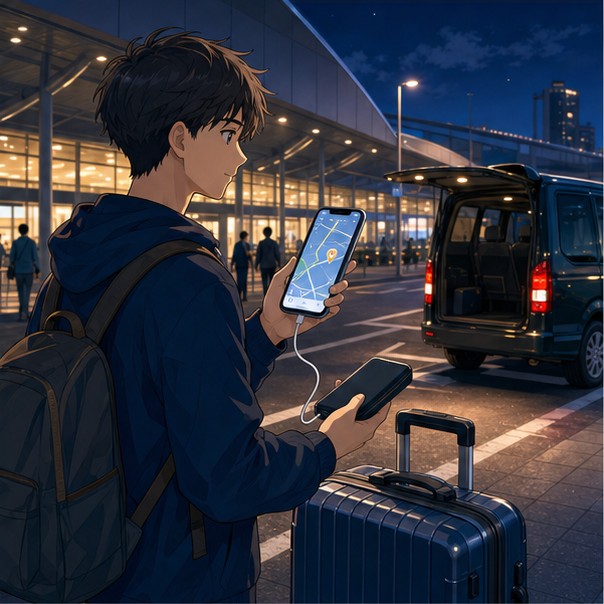
- Phone and power: charger, battery pack, and offline screenshots.
- Customs details: declaration information and any official instructions for restricted goods.
- Transport backup: the route you will use if the first option is closed or too difficult with luggage.
Keep baggage and customs documents together
Baggage changes everything at KIX. A route that is simple with one backpack may become exhausting with two large suitcases, a child, a late check-in, or a transfer at a busy station. Before leaving the customs area, check that every suitcase, delivery receipt, and small bag is with your group.
If you plan to send luggage, confirm the destination, delivery timing, hotel or housing acceptance rule, and what you must keep overnight. If luggage delivery does not fit your timing, read the airport luggage delivery guide before separating important items from your suitcase.
Decide your first route before leaving arrivals
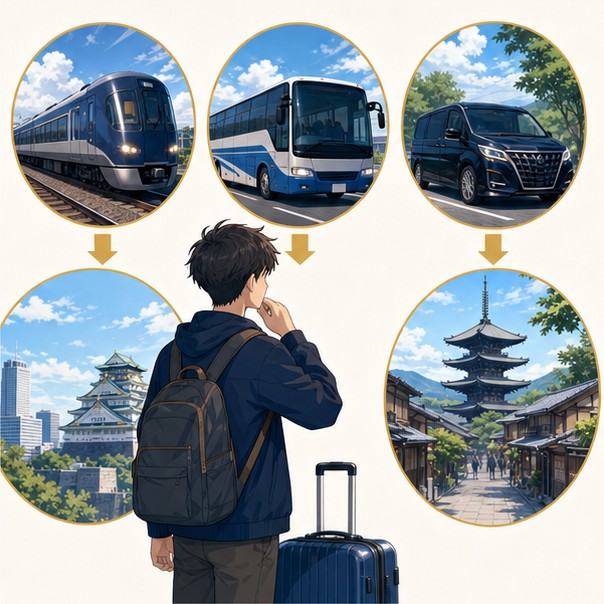
Kansai Airport connects to several routes: JR trains toward Tennoji, Osaka, Shin-Osaka, and Kyoto; Nankai trains toward Namba; limousine buses; taxis; and reserved private or flat-rate transfer services. The right choice depends on your first address, not only the city name. “Osaka” can mean Namba, Umeda, Tennoji, Bentencho, a school dormitory, or a suburban station with very different transfer stress.
If you are a first-time arrival, also check the airport-arrival Japanese phrase tool. Short phrases for address, luggage, train, taxi, and help requests can reduce stress when staff need a quick answer.
When late arrival changes the plan
Late arrival makes a normal airport route harder. Check whether your first accommodation accepts late check-in, whether the final train or bus still works, and whether a self check-in requires a phone number, app, or Japanese instructions. If your destination is a dormitory, share house, homestay, or monthly apartment, confirm the move-in time before departure.
HarukaBase’s existing late-night arrival guide focuses on Tokyo airports, but the same risk logic applies to Kansai: after the last easy route, luggage and check-in rules become the priority.
Kansai Airport Arrival Guide: Transport To Osaka, Kyoto, And Your First Address
Train, bus, taxi, or pickup comparison
The official KIX train page lists approximate train times such as JR Haruka to Tennoji, Osaka, Shin-Osaka, and Kyoto, and Nankai Rapi:t or Airport Express to Namba. Nankai’s official Rapi:t page says the limited express connects Kansai-Airport Station and Nankai Namba Station in a minimum of 34 minutes. JR West describes Haruka as direct service from Kansai Airport to Tennoji, Osaka, Shin-Osaka, and Kyoto.
Those official times help, but they do not include every transfer, elevator search, ticket purchase, platform wait, or final walk. Use the comparison below to choose by your real first address.
| Route type | Best when | Watch for |
|---|---|---|
| JR Haruka or JR rapid | Your first address is near Tennoji, Osaka, Shin-Osaka, Kyoto, or a JR-connected route. | Seat rules, transfers, platform access, luggage space, and late train timing. |
| Nankai Rapi:t or Airport Express | Your first address is near Namba or a Nankai-connected route. | Limited express ticket rules, transfer from Namba, and suitcase movement through stations. |
| Limousine bus | Your hotel, station, or district is near a bus stop and you want less station walking. | Timetable, seat availability, final stop distance, and late-arrival gaps. |
| Taxi or reserved transfer | You have large luggage, children, late arrival, a hard-to-reach address, or a group. | Reservation rules, meeting point, vehicle size, official/operator fare conditions, and language support. |
| Airport pickup support | You need help connecting arrival time, luggage, first address, and English/Japanese communication. | Availability must be confirmed in advance; support cannot change airport, immigration, customs, provider, or traffic rules. |
How to choose Osaka or Kyoto routes with luggage
For Osaka, Namba routes often point toward Nankai, while Umeda/Osaka/Shin-Osaka routes often point toward JR or bus depending on the final address. For Kyoto, JR Haruka is often the simplest rail route, but a hotel bus stop, large group, or late-night timing can change the answer. For Kobe or other Kansai areas, check the official KIX bus and rail links before choosing.
Going directly to Kyoto with suitcases? Compare the Haruka train, limousine bus, taxi, pickup support, luggage delivery, and hotel last mile in the Kansai Airport to Kyoto with luggage guide.
Going to Osaka first with suitcases? Use the Kansai Airport to Osaka with luggage guide to compare Nankai to Namba, JR to Umeda or Tennoji, limousine bus, taxi, pickup support, and luggage delivery before choosing only by fare.
If your first stop is a school dormitory or apartment, confirm whether the nearest station has elevators and whether check-in staff can receive you at the expected time. For longer first-week planning after the airport, continue with What To Do After Arriving in Japan or the Moving to Japan First Week Checklist.
Common Kansai arrival mistakes
- Booking a room without checking check-in: a late flight can break a self check-in plan.
- Choosing Namba or Osaka without the exact station: the wrong central station can add a hard final transfer.
- Putting documents in checked baggage: keep passport, school, customs, and first-address details with you.
- Ignoring luggage size: stations, stairs, and crowded trains are different with large suitcases.
- Using unofficial price screenshots: check current operator pages before buying or booking.
- Waiting until the public lobby to make every decision: exhaustion makes small mistakes more likely.
Frequently asked questions
Is Kansai Airport easy for first-time foreigners?
It can be manageable if you prepare Visit Japan Web, your first address, phone power, and a transport route before landing. The hard part is usually connecting luggage, check-in, and final station details.
Should I take JR or Nankai from Kansai Airport?
Choose by final address. Nankai is useful for Namba routes, while JR routes are useful for Tennoji, Osaka, Shin-Osaka, Kyoto, and JR-connected addresses. Always check current official routes.
Is a limousine bus easier than train?
Sometimes. A bus can reduce station walking if it stops near your hotel or first address, but the timetable, stop location, and late-arrival availability matter.
When should I use taxi or pickup support?
Consider it when you have large luggage, children, late arrival, a hard-to-find first address, or limited Japanese. Confirm availability and meeting rules before departure.
Can HarukaBase guarantee airport processing time or transport availability?
No. Airport procedures, congestion, transport schedules, traffic, customs decisions, and provider availability are controlled by official bodies and operators. HarukaBase can help you plan and communicate within the agreed support scope.
Send your flight number, arrival time, luggage count, first address, check-in rule, group size, and whether you prefer train, bus, taxi, or pickup support. HarukaBase can help compare realistic arrival routes in English and Japanese without changing airport, customs, transport, housing, or school rules.
Kansai Airport arrival guide summary
A practical Kansai Airport arrival guide starts before departure: prepare Visit Japan Web, save your first address, plan around luggage, and choose a transport route that still works if you are tired or delayed. After landing, finish immigration, baggage, and customs first, then choose the train, bus, taxi, or pickup route that fits the exact address where you will sleep.
If Osaka study is part of your plan, read Study Japanese in Osaka Short Term next. If your first issue is housing, start with Housing Support.
Official sources checked July 27, 2026: Kansai International Airport Visit Japan Web notice, Kansai International Airport train access, Japan Customs Kansai Airport electronic declaration guidance, JR West Haruka information, Nankai Rapi:t information, Kansai Airport bus access, and Kansai Airport taxi access. Public travel discussions were used only to identify recurring worries, not as factual proof.