
A Japanese language school accommodation timeline helps you avoid the most common study-abroad problem: getting accepted by a school, then discovering that dormitory rooms, share houses, or apartments do not match your arrival date. School admission, COE, and visa timing, housing availability, flight timing, and first-week setup all move together.
Start housing research when you request school materials, narrow accommodation routes by the time you apply, ask about dormitory or partner housing after acceptance, and confirm your first address before booking flights. If you need a student visa, do not wait until the final month to learn whether the school dorm, share house, homestay, or apartment path is realistic.
- Start early: your school choice and preferred neighborhood should be considered together.
- Use the period after acceptance wisely: the period around admission and COE preparation is when housing questions become concrete.
- Keep a backup: dormitories and homestays can be limited.
- Match housing to study life: commute, curfew, furniture, internet, and rules affect your Japanese learning every day.
Information checked: July 24, 2026. School intake months, dormitory availability, application deadlines, COE handling, visa processing, and accommodation rules vary by school and nationality. Confirm with the school and official visa authority before making irreversible plans.
Japanese Language School Accommodation Timeline: From Acceptance to Arrival
Start 10 to 12 months out with school and city
The Study in Japan official timeline for students entering university or vocational school after a Japanese language institute says to request materials from Japanese language institutes 10 to 12 months before the course starts, then choose a school by about 7 months prior. Housing should start here, not after the flight is booked.
At this stage, compare cities, commute expectations, school intake months, and housing style. A school near a convenient station may still be hard if the student dorm is full, the share-house commute is long, or the apartment path requires documents you do not have yet. If you are still choosing a course, read How to Choose a Short-Term Japanese Language School in Japan.
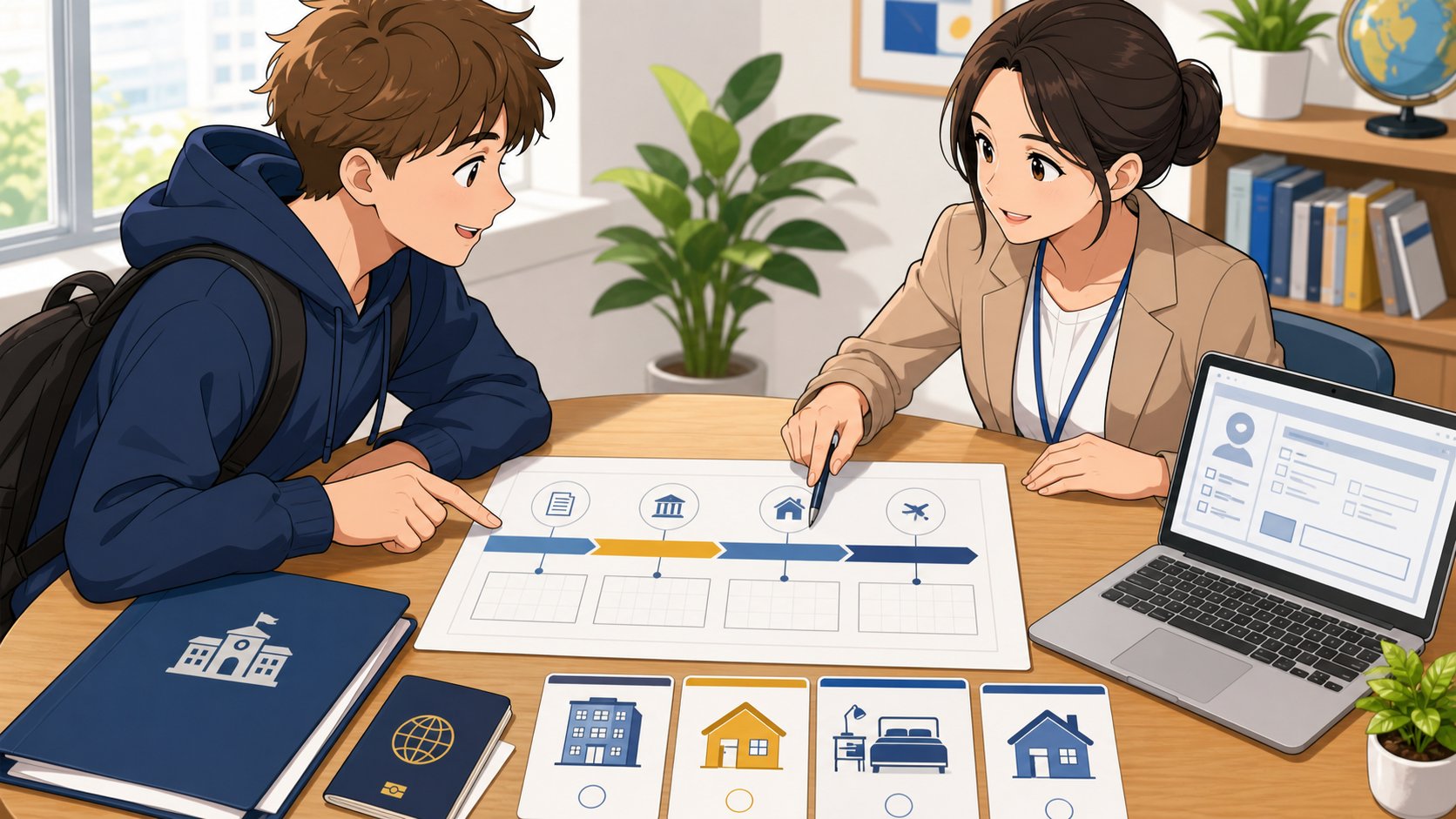
Apply 5 to 7 months before the course start
Study in Japan lists the application step from 5 to 7 months prior for the language-institute route. This is the right moment to ask specific housing questions: whether the school has dormitories, whether those dormitories are guaranteed or limited, what move-in dates are possible, what documents are needed, and whether the school can introduce partner housing.
Do not assume that “school support” means “a room is reserved.” Ask whether the room is first-come-first-served, whether payment is required before arrival, whether cancellation is possible, and what happens if your visa timing changes. If documents are the bottleneck, use the Japanese language school application documents guide.
- Availability: dorm, homestay, share house, or apartment options for your intake.
- Move-in date: earliest check-in and latest arrival time.
- Minimum stay: one month, one term, one semester, or the full course.
- Payment timing: deposit, rent, dorm fee, utilities, and refund conditions.
- Documents: passport, acceptance, residence status, emergency contact, guarantor, or school letter.
Use the three-month window for visa and housing decisions
Study in Japan places acceptance around 3 months prior, followed by immigration procedures, receiving the Certificate of Eligibility, and visa application. The Embassy of Japan in the United States says obtaining a COE takes 1 to 3 months. That means housing planning and immigration timing can overlap heavily; do not treat housing as an afterthought.
If your accommodation requires a payment, contract, or arrival date before the visa is issued, read the rules carefully and ask what happens if timing changes. HarukaBase can help organize questions in English and Japanese, but visa approval, COE issuance, and school acceptance are decided by the relevant authorities or providers.

One month before arrival: confirm address and route
Study in Japan’s timeline places travel preparation about 1 month before departure. By then, your first address should be clear enough to plan the airport route, luggage, first-night check-in, internet, and school commute. If the permanent room is not ready, book a temporary stay that bridges the gap without making the first week chaotic.
Airport route planning matters for students because you may arrive with large luggage, school documents, and limited Japanese. Compare train, airport bus, luggage delivery, and airport pickup support by arrival time and first address, not only by headline price.

After arrival: enrollment and municipal steps
After arrival, you need to complete the school enrollment process and stabilize daily life. If you are a mid- to long-term resident, Study in Japan says a residence card is issued at major airports such as Narita, Haneda, Chubu, Kansai, Kobe, Hiroshima, and Fukuoka. After deciding where to live, bring the residence card to the municipal office within 14 days to register as a resident.
Plan housing so this is not confusing. If your first stay is temporary, ask the school, provider, or municipal office how to handle address questions. For general arrival setup after housing, use the Moving to Japan First Week Checklist.
Japanese Language School Accommodation Timeline: Choosing Housing by Study Plan
Dormitory, homestay, share house, or apartment comparison
The Study in Japan accommodation page says student dormitories can lower costs and may include furniture or appliances, but rooms can be limited and rules may include curfews or shared facilities. It also says many international students live in private housing or apartments, where upfront costs, complicated rental agreements, guarantors, and furniture can become issues.
For many language-school students, the best first room is not the most independent room. It is the room that lets you sleep, commute, study, complete official procedures correctly, and ask questions when Japanese is still hard.
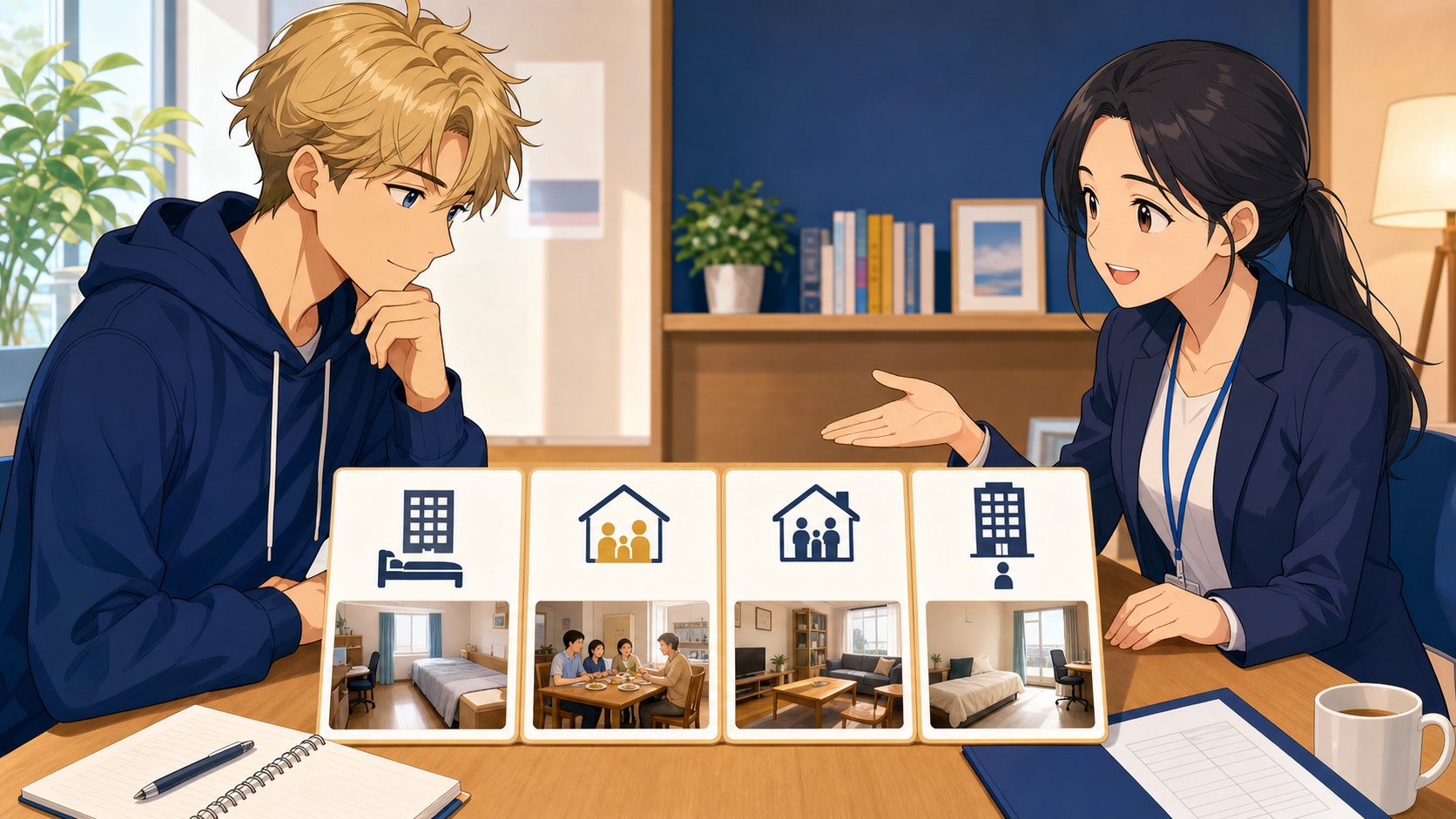
| Housing type | Best fit | Watch for |
|---|---|---|
| School dormitory | You want the easiest school-linked start and can accept shared rules. | Limited rooms, curfew, shared facilities, application deadline, and fixed move-in dates. |
| Homestay | You want daily Japanese practice and a more supported home environment. | Availability, house rules, meals, commute, allergies, and lifestyle compatibility. |
| Share house | You want a furnished room, flexible first base, and less paperwork than a private rental. | Shared kitchen/bath, house rules, screening, move-in appointment, and minimum stay. |
| Monthly apartment | You need privacy and a temporary base before deciding long-term. | Initial cost, utility terms, cancellation rules, and Japanese contract details. |
| Private rental apartment | You are ready for a longer lease and stronger paperwork. | Guarantor, emergency contact, furniture, utilities, and higher upfront cost. |
Student visa vs short-term course timing
Short-term students may have more flexibility because they may not need the same student-visa and COE path, depending on nationality, stay length, and activity. Long-term students usually need tighter coordination between school application, COE, visa, arrival, enrollment, and housing. Do not use a short-term travel plan as a model for a long-term student route.
If you will study for more than a brief short-term course, ask the school how it handles COE applications, dormitory timing, and accommodation introductions. For application help, see HarukaBase School Application Support.
Documents and guarantor questions
Renting a private apartment can involve guarantor-company screening, emergency contact details, income or savings documents, student status, and Japanese contract explanations. Dormitories and homestays usually have their own rules, but they can still require payment deadlines, behavior rules, and arrival windows. Keep copies of every important message.
If a private rental or monthly apartment becomes the right route, read the Japan apartment guarantor guide and the Japan emergency contact guide. If the main issue is provider communication, start from Housing Support.
Common accommodation mistakes
- Waiting for visa approval before asking about housing: dorms or homestays may already be limited.
- Choosing only by rent: commute, curfew, internet, furniture, and study time matter.
- Assuming school dorms are guaranteed: ask whether the room is reserved or only introduced.
- Booking a flight before check-in is confirmed: late arrival can break the first night.
- Ignoring cancellation rules: COE or visa timing changes can affect payment risk.
- Starting with a private apartment too early: the paperwork, guarantor requirements, furniture, and utilities may be overwhelming during your first week.
Frequently asked questions
When should I ask a Japanese language school about accommodation?
Ask while comparing schools, then ask specific room, payment, and move-in questions when you apply or receive acceptance. Do not wait until the month before arrival.
Are school dormitories guaranteed?
Not always. Some schools operate dorms, some introduce partner housing, and some have limited rooms. Ask whether the room is guaranteed, waitlisted, or only introduced.
Should I choose a share house or apartment first?
A share house is often simpler for a first base. A private apartment can be better later if you need privacy and can handle guarantor, emergency contact, utilities, and furniture.
Can I book housing before my visa is issued?
Sometimes, but read payment and cancellation rules carefully. Ask what happens if COE or visa timing changes.
Can HarukaBase guarantee school admission, visa approval, or a room?
No. HarukaBase can help organize school and housing questions, support communication, and explain practical options, but schools, immigration authorities, and housing providers make their own decisions.
Send your target intake, school candidates, city, visa route, arrival airport, housing preference, budget range, and timing worries. HarukaBase can help you organize school application and housing questions in English and Japanese without promising admission, visa approval, room availability, or contract outcomes.
Review School Application Support, review Housing Support, or send a free inquiry.
Japanese language school accommodation timeline summary
A Japanese language school accommodation timeline should start when school research starts. Request school materials early, ask housing questions during application, use the acceptance and COE window to confirm realistic accommodation, lock the first address before flights, and prepare for enrollment and municipal procedures after arrival. The best room is the one that lets you study, sleep, commute, and handle paperwork without panic.
For a shorter study plan, continue with the short-term Japanese language school guide. For first-week life after landing, use the What To Do After Arriving in Japan guide.
Official sources checked July 24, 2026: Study in Japan official timeline, Study in Japan immigration and student visa guidance, Embassy of Japan in the United States COE holders page, Study in Japan accommodation guidance, and Study in Japan academic fees page. Public forum and school-provider pages were reviewed only for question discovery and gap analysis.