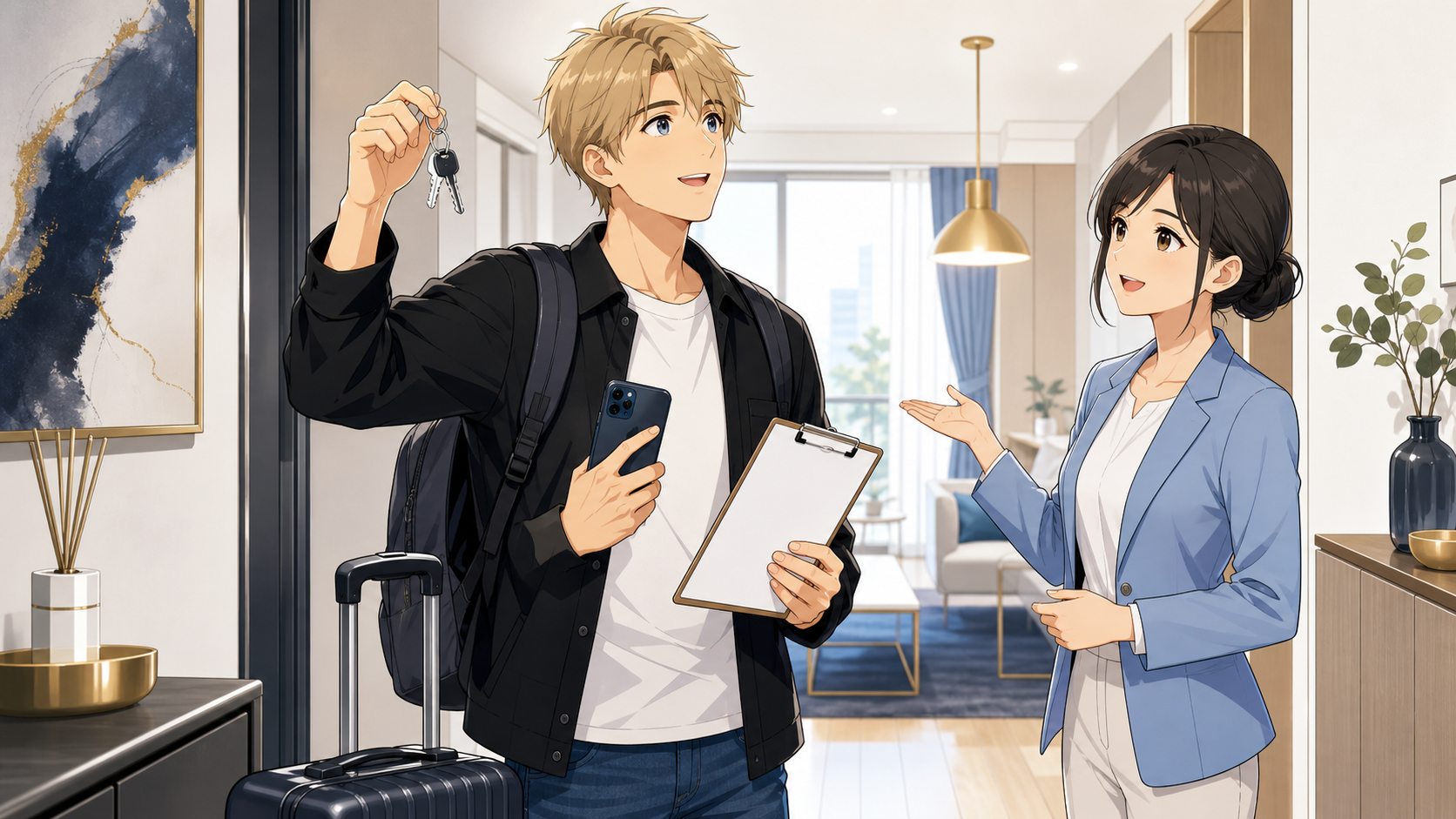
A Japan apartment move-in checklist protects you from avoidable stress after you receive the keys. Many foreign renters focus on the application, guarantor, and first payment, then forget to document the room on day one. In Japan, move-out settlements can involve rules on restoring the property to its original condition, security deposits, repair responsibility, and building-specific practices. Good photos and early reports make the conversation clearer.
Before unpacking, photograph and video the entire room, check water, electricity, gas-related instructions, air conditioning, doors, windows, window screens, drains, appliances, meters, mailbox, intercom, and garbage rules. Report existing damage in writing as early as possible, keep copies, and ask for Japanese support when a defect or contract term is unclear.
- Document first: take photos before placing furniture or cleaning heavily.
- Check function, not only appearance: water, drains, air conditioning, locks, intercom, and outlets matter.
- Report in writing: keep a timestamped record of defects and provider replies.
- Learn building rules early: garbage, noise, bicycle parking, mail, and visitors can cause trouble.
Information checked: July 20, 2026. Lease wording, provider rules, repair responsibility, and deposit handling vary by property and contract. This guide is practical preparation, not legal advice.
Japan Apartment Move-In Checklist: Before You Accept the Keys
Why the condition report matters
The Ministry of Land, Infrastructure, Transport and Tourism provides foreign-renter materials that include rental checklists, sample lease documents, and a property-condition checklist example for move-in and move-out. Tokyo’s English tenant-landlord dispute guidelines explain that a security deposit may be used for unpaid rent, tenant-caused damage, and the tenant’s share of restoration costs, and that a breakdown should be presented when deductions are made.
The practical lesson is simple: do not rely only on memory. If a scratch, stain, crack, broken screen, old burn mark, loose faucet, or appliance issue already exists, record it before you start living there. A clear day-one record can reduce confusion later.
Photos and video before furniture
Use your phone systematically. Start with a slow video from the entrance, then take still photos by area: entrance, kitchen, bathroom, toilet, sink and laundry area, room corners, walls, floor, balcony, windows, closets, appliances, meters, mailbox, and exterior entry. Turn on lights and use close-up shots for defects.
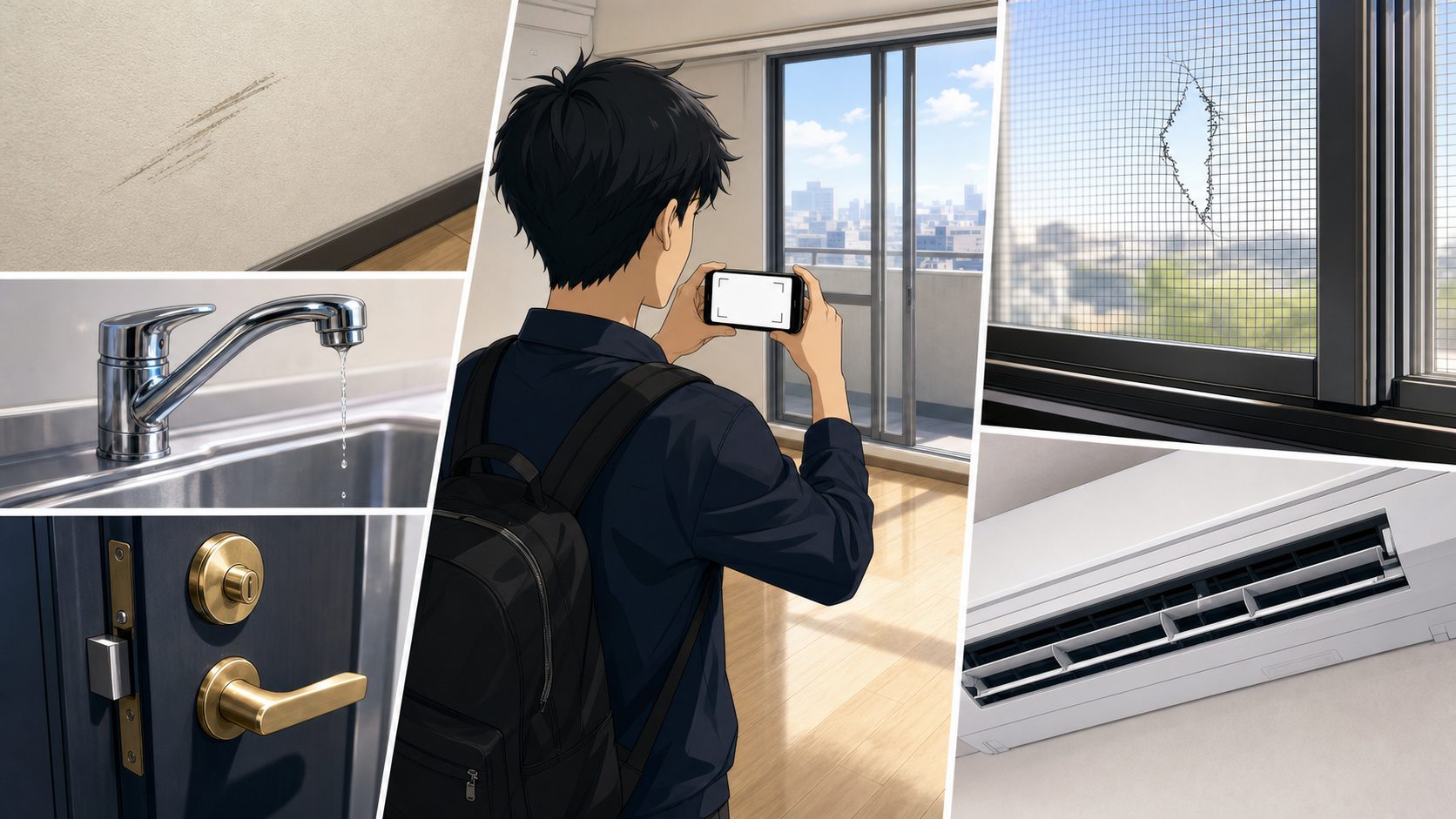
- Wide shot: show which room or wall the issue belongs to.
- Close-up: show the scratch, stain, crack, mold, leak, dent, or broken part.
- Reference object: place a coin, card, or finger nearby for scale when useful.
- Date record: keep original files with timestamps and do not only send compressed chat images.
- Written note: describe the location in simple words.
Walls, floors, doors, and windows
Check areas that often become points of dispute at move-out: wallpaper stains, nail holes, dents, floor scratches, peeling, burn marks, condensation stains, window locks, insect screens, closet doors, balcony doors, and entrance locks. Open and close doors and windows slowly. If something sticks, rattles, or does not lock properly, record it.
Do not repair or repaint without permission. Even if your intention is good, unauthorized repairs can create a new problem. Ask the management company how to handle existing damage or urgent safety issues.
Water, air conditioning, appliances, and meters
Run water briefly in the kitchen, bathroom, wash basin, toilet, and washing-machine area. Watch for leaks, slow drainage, unusual smells, weak flow, or a drain trap that looks incomplete. Turn on the air conditioner if the remote is present, listen for unusual noise, and check whether cold or warm air starts as expected for the season.
If the unit includes appliances, test what the contract says is included. Photograph model numbers and condition. For meters, take an initial photo when you can safely access them, especially if the provider asks for initial readings.
| Check item | What to test | What to record |
|---|---|---|
| Water and drains | Flow, leaks, odors, drainage speed | Video of leak or slow drain, location, date first noticed |
| Air conditioner | Power, remote, airflow, unusual sound | Photo of unit and remote, short video if abnormal |
| Doors and locks | Open, close, latch, lock, key count | Video of sticking or damage, key receipt details |
| Windows and screens | Locks, sliding, cracks, screen tears | Wide and close-up photos |
| Appliances | Included items only, basic power/function | Model, visible damage, error display |
Building rules and neighborhood basics
Living in a Japanese apartment also means following the building’s rules. Confirm garbage days, disposal location, bulky-waste rules, bicycle parking, parcel delivery boxes, mailbox, intercom, visitor rules, noise expectations, smoking areas, and whether shoes, umbrellas, or personal items can be left in shared spaces. If the agent gives Japanese-only papers, ask for the key points in English or simple Japanese.
If you are still deciding between housing types, compare routes in the share house vs monthly apartment guide and the first-month Tokyo housing guide.
Japan Apartment Move-In Checklist: After You Enter the Room
Utilities, internet, and first-week setup
Confirm which utilities are already open and which require your own start request. Electricity and water may be usable immediately in some rentals, while gas often requires a scheduled opening visit when the property uses gas appliances. Internet can take time if a new line or contract is needed. Ask the provider what is included, what must be contracted separately, and whether construction approval is needed.
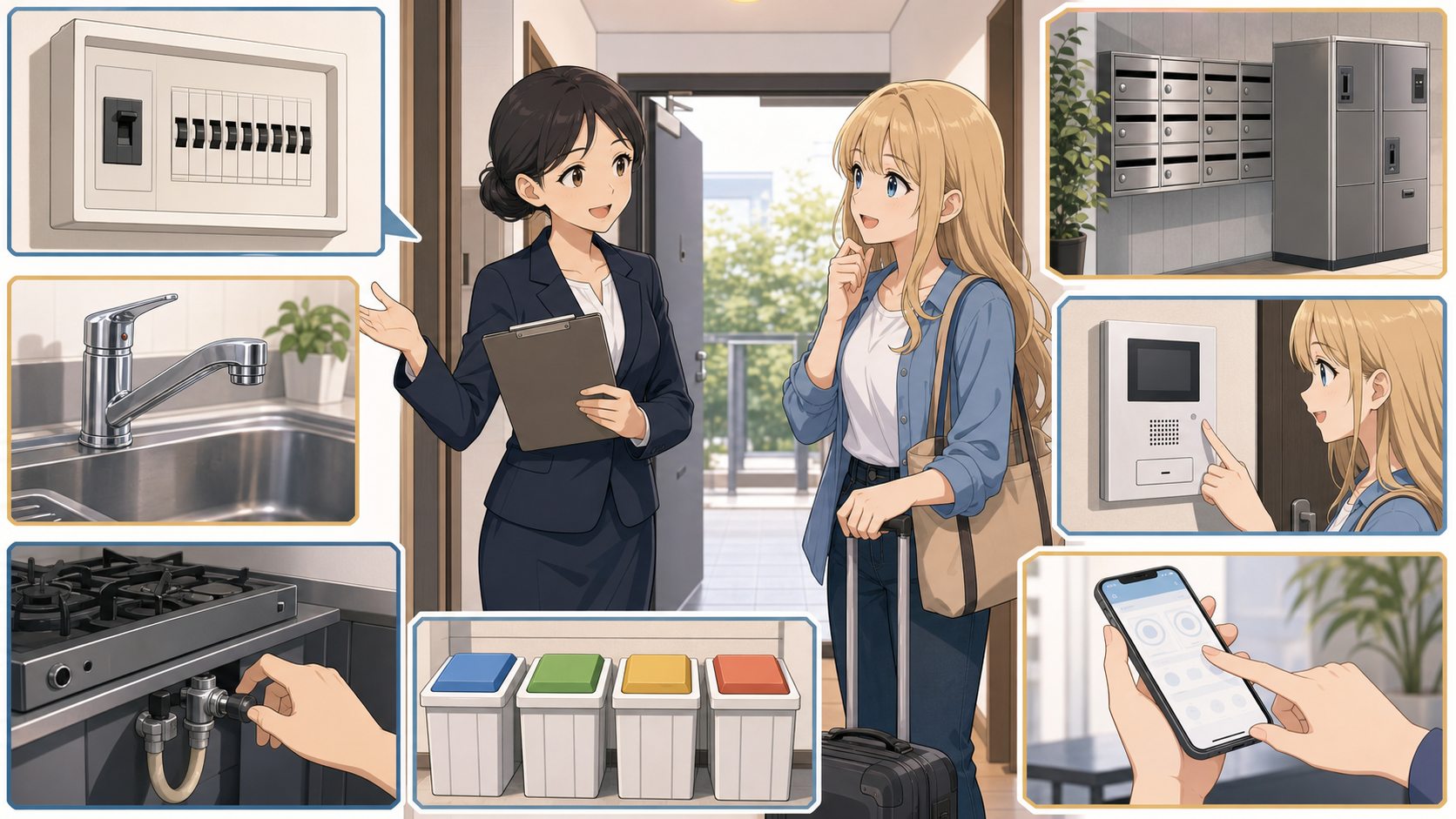
- electricity, water, and gas opening status;
- internet or a temporary pocket Wi-Fi plan;
- garbage calendar and sorting rules;
- mailbox, parcel box, intercom, and nameplate rules;
- emergency contact and management-company contact method;
- address registration timing if you are a resident.
Report defects quickly and politely
Send existing defects to the agent or management company in writing. Keep the tone factual: location, problem, photo/video, date first noticed, and whether it affects safety or daily use. If the issue is urgent, such as a water leak, lock failure, electrical hazard, gas smell, or severe appliance problem, use the emergency contact route specified by the provider.
- State the apartment name and room number.
- Describe the location and issue.
- Attach wide and close-up photos.
- Say whether it was present at move-in.
- Ask whether repair, confirmation, or no action is needed.
- Keep the reply with your lease documents.
Documents, payments, and support contacts
Store your lease, important-points explanation, receipts, guarantor-company paperwork, insurance, move-in checklist, defect reports, utility confirmations, and management contact details in one folder. If a provider asks for a new payment or form after move-in, verify it against the written contract or invoice before sending money.
If the application stage is still confusing, use the rent an apartment in Japan before arrival guide, Japan apartment guarantor guide, and Japan emergency contact guide.
Common mistakes and FAQ
- Unpacking before photos: furniture hides old damage and makes the timeline unclear.
- Sending only vague messages: write the room area, issue, and date.
- Ignoring small water issues: leaks and drain problems can become expensive.
- Throwing away receipts: keep payments, keys, appliance manuals, and provider replies.
- Assuming rules from your home country apply: garbage, noise, repairs, and deposit practices may be different in Japan.
- Waiting until move-out: report existing defects early instead of arguing months later.
What is genjo kakunin?
It means confirming the current condition. In rental housing, a condition checklist can be used to record the room’s condition at move-in and move-out.
Should I report tiny scratches?
Report visible existing damage that could be confused with tenant-caused damage later. Be factual and organized rather than emotional.
Can I repair damage myself?
Ask first. Unauthorized repair, repainting, drilling, or replacement can violate the lease or create additional costs.
What if the agent only speaks Japanese?
Ask for written confirmation and use a trusted Japanese speaker or support service when money, repairs, or contract responsibilities are unclear.
Does this checklist decide deposit liability?
No. Liability depends on the contract, the facts, the provider’s decision, and applicable rules. The checklist helps create a clear record; it is not legal advice.
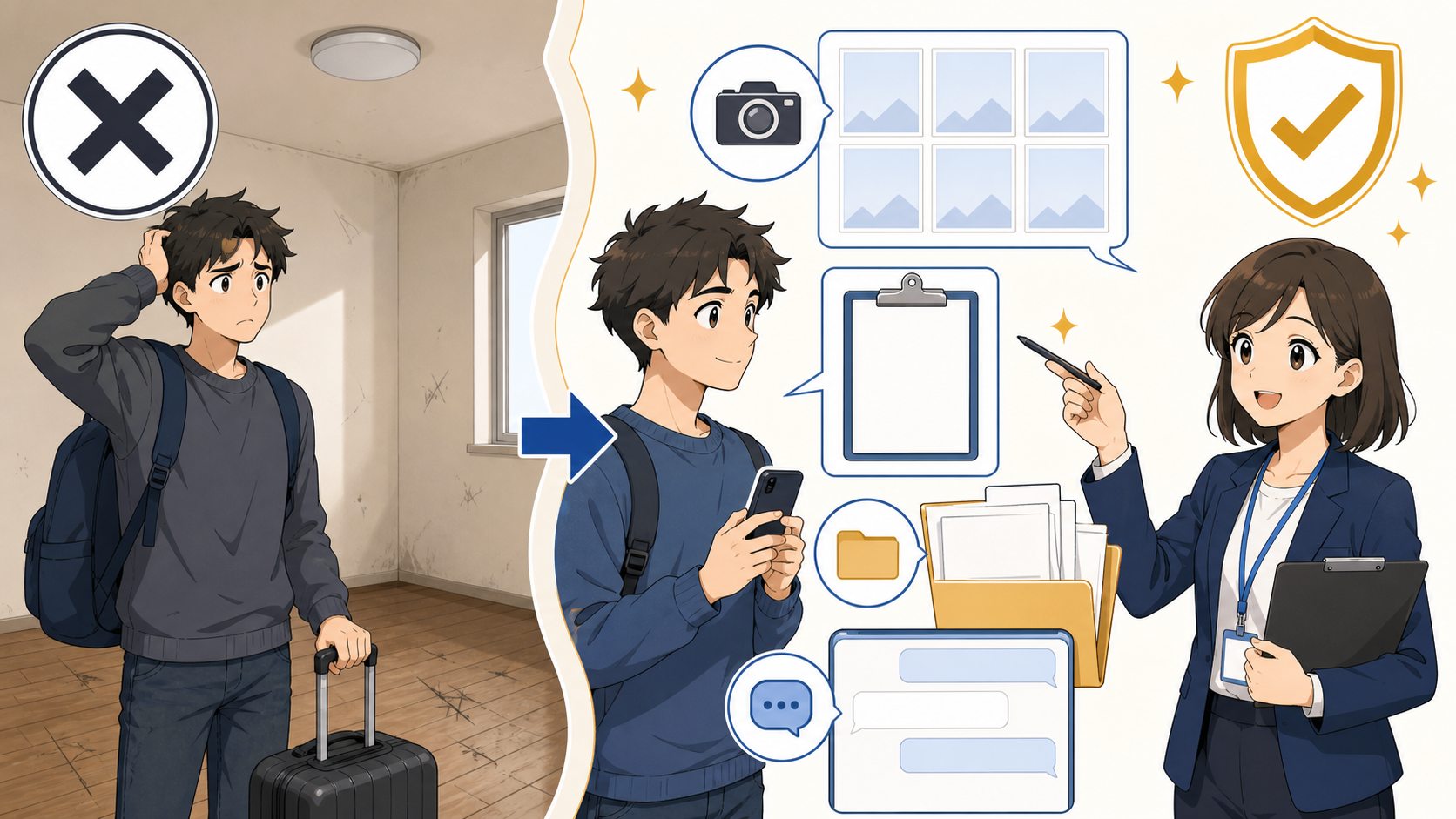
HarukaBase can help eligible foreign renters understand housing-provider messages, prepare questions, and communicate within the agreed support scope. We cannot guarantee repairs, override a lease, or act as a financial guarantor, but we can help you avoid preventable misunderstandings.
Japan apartment move-in checklist summary
A Japan apartment move-in checklist is most useful before you unpack. Take wide and close-up photos, test water and equipment, confirm utility and garbage rules, report defects in writing, and keep every reply with your lease documents. The goal is not to start a dispute; it is to create a calm, dated record that helps everyone understand the room’s condition.
For help before signing, start with HarukaBase Housing Support. If you already have a question about a specific property, send the exact document or message through the free inquiry form so the support path can be checked without changing provider rules or contract responsibilities.
Official and institutional sources checked July 20, 2026: MLIT support for foreign renters and multilingual housing materials, Japan Property Management Association foreign-language agency list, Tokyo tenant-landlord dispute guideline notice, and Tokyo Guidelines for Preventing Tenant-Landlord Disputes English PDF. Practical forum discussions were reviewed only for question discovery.